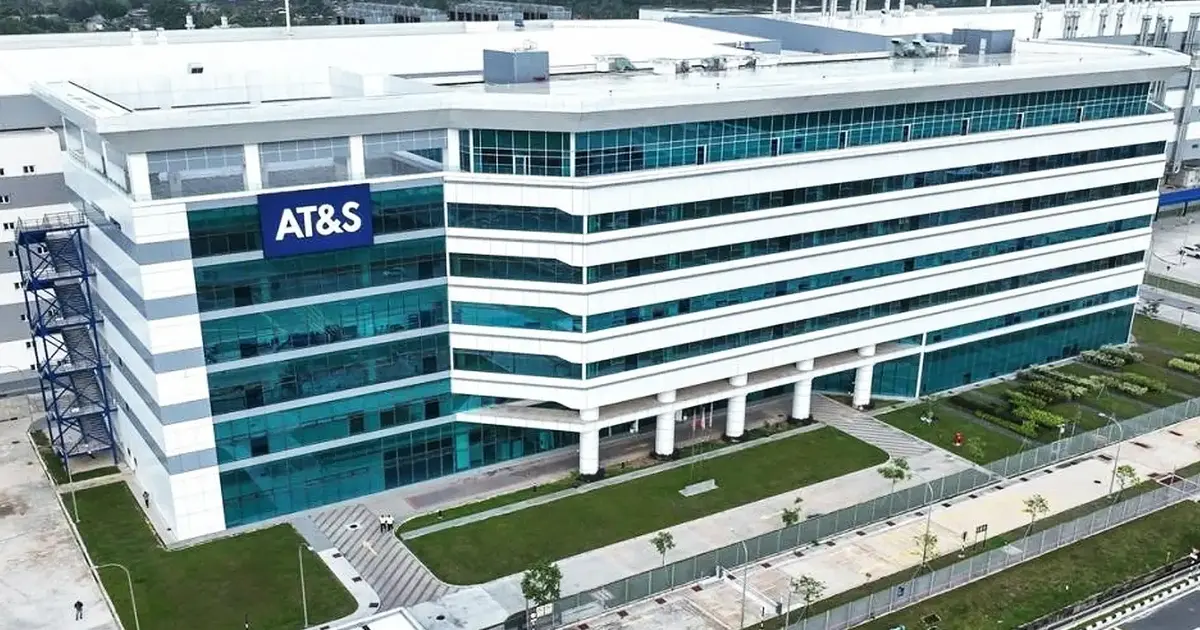
Austria-based printed circuit board and semiconductor manufacturer AT&S has committed RM9.4 billion to establish a major production facility in Kulim, representing one of the most significant foreign direct investment pledges to the Malaysian electronics sector in recent years. The announcement underscores revived international confidence in the country's capacity to serve as a competitive manufacturing base within Asia-Pacific's increasingly strategic semiconductor ecosystem.
Prime Minister Anwar Ibrahim has characterised the investment as validation of Malaysia's economic governance and institutional credibility, factors that have become critical differentiators as multinational corporations reassess their supply chain architecture across Asia. The decision by AT&S, a Vienna-listed company with substantial operations across Europe and Asia, signals that foreign investors view the country's regulatory environment and investment framework as sufficiently robust to justify capital commitments of this magnitude in technology-intensive sectors.
The Kulim investment arrives during a period of intense regional competition for semiconductor manufacturing capacity. Thailand, Vietnam, and Indonesia are simultaneously courting global chipmakers with incentive packages and infrastructure development programmes. Malaysia's ability to attract AT&S reflects ongoing efforts to position the nation above competitors on factors beyond labour costs—particularly technical workforce availability, established supply chain ecosystems, and government support mechanisms. The Kulim facility will likely integrate into AT&S's existing regional footprint, enabling the company to consolidate production and improve distribution efficiency across key markets.
AT&S's decision carries particular significance for Malaysia's broader industrial strategy. The government has prioritised semiconductor and advanced electronics manufacturing as priority sectors under various economic transformation initiatives. Foreign direct investment in these fields creates downstream employment across assembly, testing, design, and support services—job categories that typically command higher wages than traditional manufacturing roles. The Kulim plant will require specialised technical personnel, generating demand for skilled engineering and production staff that can elevate workforce compensation levels across the electronics industry.
The timing of this commitment also reflects global supply chain dynamics following disruptions over the past several years. Multinational manufacturers have increasingly sought geographic diversification to reduce dependency on any single production location. Malaysia, with established electronics infrastructure in the Penang and Klang Valley regions alongside newer development zones like Kulim, provides AT&S with flexibility in production allocation and risk mitigation. The company can distribute manufacturing operations across multiple facilities, enhancing resilience against future logistical shocks.
From AT&S's perspective, the investment demonstrates confidence in the company's long-term market position within Southeast Asia and beyond. The Kulim facility will serve demand from telecommunications, automotive, industrial electronics, and consumer electronics manufacturers throughout the region. As these end-markets expand—particularly driven by electrification trends, 5G infrastructure buildout, and industrial automation—printed circuit board manufacturers like AT&S anticipate sustained demand growth that justifies substantial capacity additions.
The investment also positions Kulim as an emerging secondary technology hub, complementing Malaysia's established electronics concentrations. Government incentives, including potential tax breaks and infrastructure support, likely facilitated the deal. However, the fundamental attraction lies in operational fundamentals: proximity to key end-markets, presence of qualified workers, existence of supporting supplier networks, and reliable utilities and logistics infrastructure. These considerations typically outweigh incentive packages in location decisions for capital-intensive manufacturing.
Looking regionally, the AT&S commitment reflects Malaysia's persistent appeal despite competition from other Southeast Asian economies. Vietnam has captured substantial new semiconductor investment, yet Malaysia retains structural advantages including more mature industrial ecosystems, English-language workforce capability, and established relationships with multinational corporations. The country remains essential to global electronics supply chains rather than merely peripheral—a distinction that influences investment allocation decisions by major manufacturers.
For Malaysian stakeholders, the investment implications extend beyond immediate economic metrics. Foreign semiconductor investments typically drive technology transfer through training, process improvements, and operational standards that diffuse through supplier networks. Local component suppliers, logistics providers, and service companies gain exposure to international best practices. Over time, this accelerates development of indigenous capability within the electronics supply chain, reducing dependency on foreign expertise and enhancing the country's competitive position in higher-value manufacturing segments.
The Kulim project also carries symbolic weight within Malaysia's broader development narrative. Successive governments have pursued transformation from low-cost assembly location toward advanced manufacturing hub. Major foreign investments in technology-intensive sectors validate this strategic direction and provide evidence that the transition is progressing—even if adoption remains uneven across sectors and regions. Each significant commitment attracts subsequent related investments as manufacturers seek proximity to established production ecosystems.
Looking forward, the success of the Kulim facility will influence AT&S's future expansion decisions and other multinational manufacturers' Malaysia assessments. Smooth project execution, positive workforce productivity, and effective collaboration with government agencies could generate additional orders from existing partners and attract new investors evaluating Southeast Asian locations. Conversely, operational challenges or regulatory complications could dampen confidence, potentially redirecting future investments toward competing jurisdictions.
The RM9.4 billion commitment ultimately reflects a moment when Malaysia's industrial fundamentals, governance reputation, and regional positioning align attractively for foreign manufacturers seeking capacity and geographic diversification. As global supply chains continue reconfiguring around resilience rather than pure cost optimisation, such investments appear likely to persist across technology-intensive sectors where Malaysia maintains comparative advantages.