Prime Minister Anthony Albanese has firmly rejected a proposal from far-right senator Pauline Hanson to transform Australia into a monocultural society, describing the concept as both divisive and fundamentally based on historical falsehoods. Speaking in Canberra, Albanese countered Hanson's recent remarks by asserting that modern Australia has never functioned as a monoculture and cannot return to a state that never existed in the first place. The prime minister characterised such arguments as nonsensical, emphasising that they fail to reflect contemporary Australian identity and values.
Hanson's One Nation party has experienced a significant surge in electoral support over the preceding six months, with opinion polling now positioning it as the nation's most popular political party. This rise reflects growing discontent among portions of the Australian electorate regarding immigration and multicultural policies. In a speech delivered the previous week, Hanson launched a broad critique of Australia's long-established multicultural framework, arguing that the country's immigration intake has precipitated a national crisis. Her comments have reignited longstanding debates about national identity and cultural integration that periodically surface in Australian politics.
During a separate television interview on the same day, Hanson articulated her vision more fully, proposing that while Australia could acknowledge its multiracial composition, citizens should prioritise a unified Australian identity rather than maintaining separate cultural communities. She suggested that individual groups living according to their own cultural norms and legal traditions posed a challenge to national cohesion. Hanson's argument drew an international comparison, pointing to Japan as an example of a successful monocultural nation that has maintained social stability. However, she insisted she was not advocating cultural erasure, merely suggesting that shared civic identity should supersede ethnic and cultural particularisms.
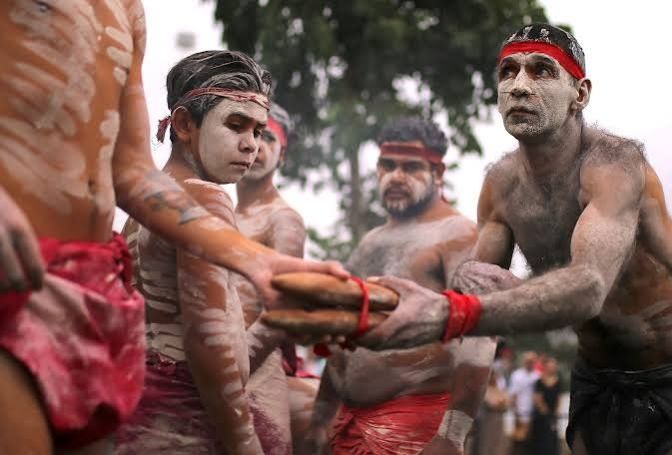
Albanese's response directly challenged the factual premise underlying Hanson's argument. The prime minister pointed out that Australia's diversity predates European colonisation by thousands of years. Prior to white settlement in the late 18th century, the continent was inhabited by numerous distinct First Nations peoples, each with their own languages, laws, and cultural systems. This historical reality fundamentally undermines the notion that Australia ever possessed a genuine monocultural character. Even the early European settlers themselves were not a unified population, Albanese noted, bringing diverse backgrounds and origins to the new colonial society.
For Malaysian and Southeast Asian observers, this debate carries particular relevance. The region itself encompasses some of the world's most ethnically and religiously diverse societies, with Malaysia serving as a prominent example of a functioning multiethnic democracy that has, despite periodic tensions, maintained constitutional protections for different communities through frameworks like the Federal Constitution. Thailand, Indonesia, and Singapore similarly manage significant population diversity through different governance models. Australia's grappling with similar questions about national identity and cultural integration mirrors challenges faced across Asia-Pacific nations as globalisation and migration reshape demographic patterns.
The prime minister emphasised that national progress requires moving beyond what he characterised as divisive cultural disputes designed to generate social friction. Albanese presented Australia's diversity not as a liability requiring correction but as a foundational strength that enhances the nation's economic competitiveness, cultural dynamism, and international standing. This framing reflects a fundamentally different vision of national interest than that proposed by Hanson's One Nation movement, which prioritises cultural homogeneity as a prerequisite for social cohesion.
The timing of this exchange is significant for understanding Australian politics in the mid-2020s. One Nation's resurgence indicates that immigration scepticism and concerns about cultural change resonate with meaningful segments of the electorate. These anxieties often correlate with economic insecurity, regional disadvantage, and perceived rapid social transformation in particular communities. Rather than dismiss such concerns wholesale, mainstream political parties in Australia face the challenge of addressing legitimate grievances about social services, employment, and community infrastructure while defending pluralistic values against exclusionary nationalism.
Hanson's monoculture proposal also invites practical scrutiny beyond its historical inaccuracy. Modern Australia, like most developed economies, depends substantially on skilled immigration to sustain economic growth, fill labour shortages, and support an ageing population. A shift toward restrictive immigration policies and assimilationist cultural frameworks would likely create significant economic disruption. Similarly, Australia's position as a regional power in the Asia-Pacific depends partly on its capacity to engage with culturally diverse neighbours and populations, a capability that would be compromised by embracing an inward-focused monocultural ideology.
The broader context of this debate involves fundamental questions about how democracies define and transmit national identity during periods of demographic change. Australia is far from alone in wrestling with these issues; similar tensions manifest across Europe, North America, and increasingly throughout Asia. The challenge lies in accommodating legitimate concerns about community cohesion and cultural preservation while maintaining openness to diversity and avoiding scapegoating of minority populations for complex structural problems.
Albanese's defence of multicultural Australia reflects the position held by most major Australian political parties and institutional forces, from business associations to universities to civil society organisations. However, One Nation's rising support suggests that significant numbers of Australians feel alienated from this consensus, perceiving that their concerns about cultural change are not adequately addressed by mainstream political discourse. Whether Australia's political system can bridge this divide through more inclusive and substantive discussion of immigration, integration, and identity remains an open question as the nation approaches its next electoral cycle.

