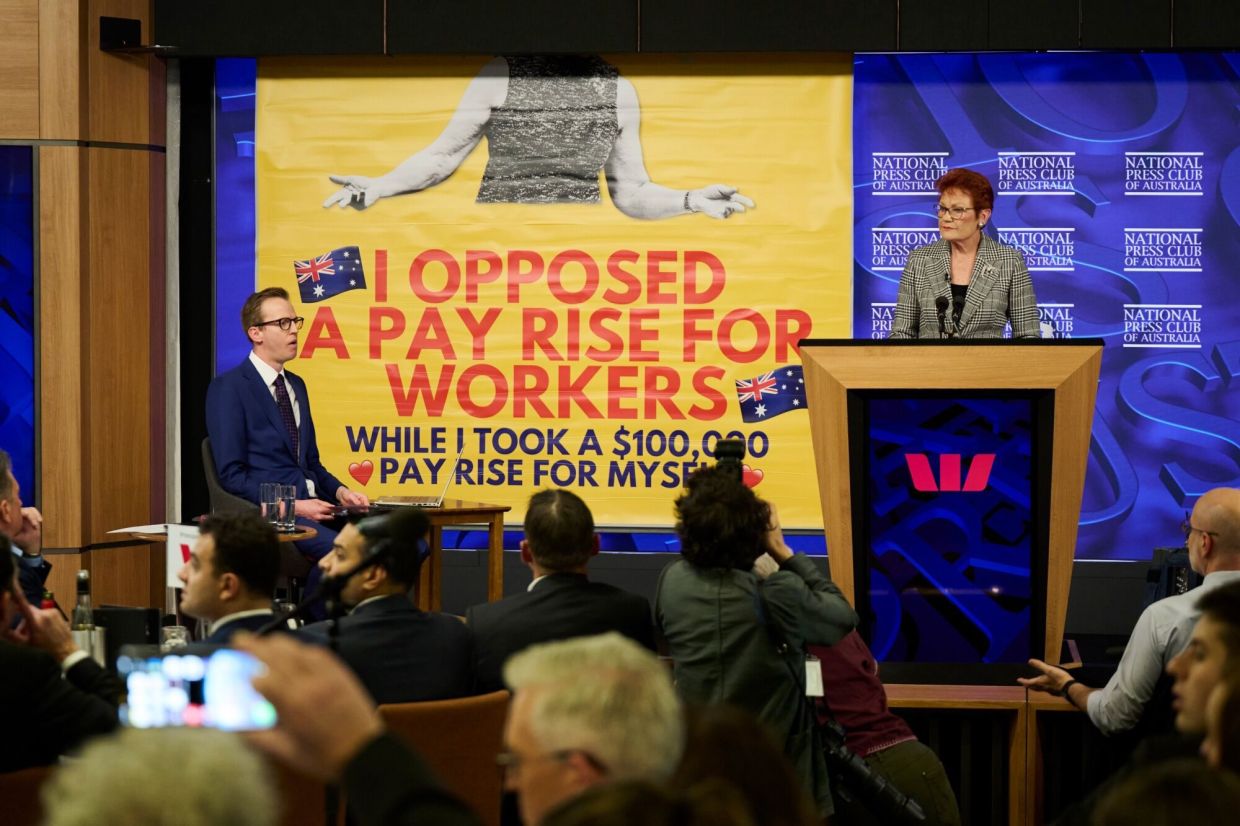
Pauline Hanson, leader of Australia's One Nation party, has intensified her push for fundamental changes to the nation's cultural identity, declaring that Australia must become a monocultural society even as it remains multiracial. Speaking at the National Press Club in Canberra on Wednesday, Hanson delivered a sweeping critique of multiculturalism as a flawed policy framework, positioning cultural assimilation as essential to resolving the country's mounting social and economic challenges. Her remarks represent a direct attack on the multicultural consensus that has underpinned Australian immigration and integration policy for decades, signalling a significant rightward shift in political rhetoric around identity and belonging.
The One Nation leader framed her vision as a practical necessity rather than ideological preference, arguing that Australians must function "under the one cultural umbrella" to maintain social cohesion. This distinction between multiracialism—which she accepts—and multiculturalism—which she rejects—reflects a deliberate attempt to separate acceptance of ethnic diversity from endorsement of cultural pluralism. Hanson contends that while Australia cannot prevent people of different backgrounds from residing within its borders, the nation's institutions, values and civic life should revolve around a single, dominant cultural framework. Her formulation seeks to reframe what critics would identify as assimilationist policy as a pragmatic rather than exclusionary position.
Hanson has weaponised Australia's severe housing affordability crisis to advance her cultural nationalism agenda, attributing the shortage of affordable dwellings directly to immigration levels. The connection she draws between population growth and housing scarcity taps into genuine frustration among Australian voters struggling with property costs that have climied dramatically relative to wages. By linking immigration to housing unaffordability, Hanson transforms a complex economic problem—involving supply constraints, investment patterns, foreign investment policies, and interest rate fluctuations—into a straightforward narrative of too many migrants chasing too few homes. This rhetorical strategy has proven politically potent, allowing her to position immigration restriction as a solution to a tangible, deeply felt problem affecting millions of Australian households.
Beyond housing, Hanson has leveraged broader economic grievances to expand One Nation's electoral appeal. She attributes the pressures of resurgent inflation, elevated interest rates, and surging fuel costs to both immigration and green energy policies, framing these challenges as consequences of failed governance rather than structural economic forces or international developments. The fuel cost spike, which reflects global oil market dynamics and international tensions rather than domestic policy alone, becomes repackaged as symptomatic of a system that prioritises progressive environmental policies over household cost-of-living relief. By bundling these grievances together and attributing them to immigration and green policy, Hanson constructs a unified narrative that resonates with economically anxious voters.
The timing of Hanson's ascendancy carries particular significance for regional stability and Australia's diplomatic positioning in Southeast Asia. As the centre-right coalition's electoral collapse last year triggered a shift toward Labor government under Prime Minister Anthony Albanese, space has opened for populist challengers to capture protest votes. One Nation's recent surge in opinion polling reflects not merely policy disagreement but deeper voter alienation from mainstream parties perceived as disconnected from working-class economic distress. For Malaysia and other Southeast Asian nations with substantial Australian diaspora communities and significant migration flows to Australia, Hanson's rising political influence signals potential shifts in Australian immigration policy and bilateral relations that warrant careful monitoring.
Hanson's reference to restricting entry from "places immersed in extremism like radical Islam" carries particular implications for Muslim-majority nations throughout the region. This rhetoric, while framed in security terms, has the effect of stigmatising entire populations and nations based on religious identity rather than individual assessment. For Malaysian policymakers and business communities with longstanding connections to Australia—whether through education, trade, or migration—such political positioning creates uncertainty around future bilateral relations and the receptiveness of Australian institutions to Asian engagement. The statement also resonates with existing anti-Muslim sentiment in Australian political discourse, potentially emboldening similar rhetoric domestically and affecting the lived experiences of Southeast Asian migrants and students in Australia.
Prime Minister Albanese has attempted to position himself as a counterweight to what he characterises as "simplistic grievance-based politics," arguing that One Nation's surge reflects genuine economic dysfunction rather than any inherent shift in voter values. His government has pursued targeted interventions including a temporary fuel excise reduction and tax reform initiatives designed to address housing affordability. These measures represent an attempt to neutralise populist criticism through direct policy response, though they address symptoms rather than the underlying structural challenges in Australia's housing market and energy sector. Albanese's framing suggests he views the rise of One Nation as a symptom of policy failure by previous governments rather than as evidence of a permanent rightward realignment in Australian politics.
The housing affordability dimension of Hanson's critique warrants particular scrutiny given that immigration accounts for only one variable in Australia's property market dysfunction. Supply constraints driven by planning restrictions, foreign investment dynamics, institutional investor activity, and the nation's debt-fuelled economic model all substantially contribute to affordability challenges. By attributing housing crisis primarily to immigration, Hanson deflects attention from structural economic issues and policy choices made by governments across the political spectrum. This oversimplification appeals to voters seeking clear culprits and straightforward solutions, yet it obscures the genuine policy complexity that any government attempting to resolve housing affordability must confront.
One Nation's consolidation of protest voting and populist sentiment occurs within a broader global context where hard-right parties have capitalised on economic anxiety and cultural change. From Europe to North America, similar movements have harnessed immigration anxieties and economic grievance to expand their political base, often achieving surprising electoral success. Australia's experience demonstrates how these dynamics operate within the Anglophone democracies most closely aligned with Southeast Asia, highlighting the vulnerability of developed economies to populist mobilisation when mainstream parties fail to address material living standards. For regional observers, Hanson's rising influence serves as a cautionary example of how unfulfilled economic expectations create political openings for anti-establishment movements, regardless of the substantive merit of their proposed solutions.
The contrast between Hanson's cultural nationalism and the Albanese government's multicultural framework reflects a fundamental debate about Australia's future orientation and identity. Hanson's call for a monocultural society, even if theoretically distinct from racial exclusion, operates within a political context where such rhetoric historically presages tighter restrictions on immigration from non-European sources. Her Wednesday speech marks her first address to the National Press Club in her 30-year political career, a symbolic milestone indicating both her persistent presence in Australian politics and her growing mainstream acceptance as a legitimate political voice. This legitimisation of previously marginalised rhetoric reflects the degree to which economic anxiety has shifted the boundaries of acceptable political discourse in Australia, with implications extending throughout the region for how multicultural, economically integrated societies navigate the tensions between diversity and social cohesion.