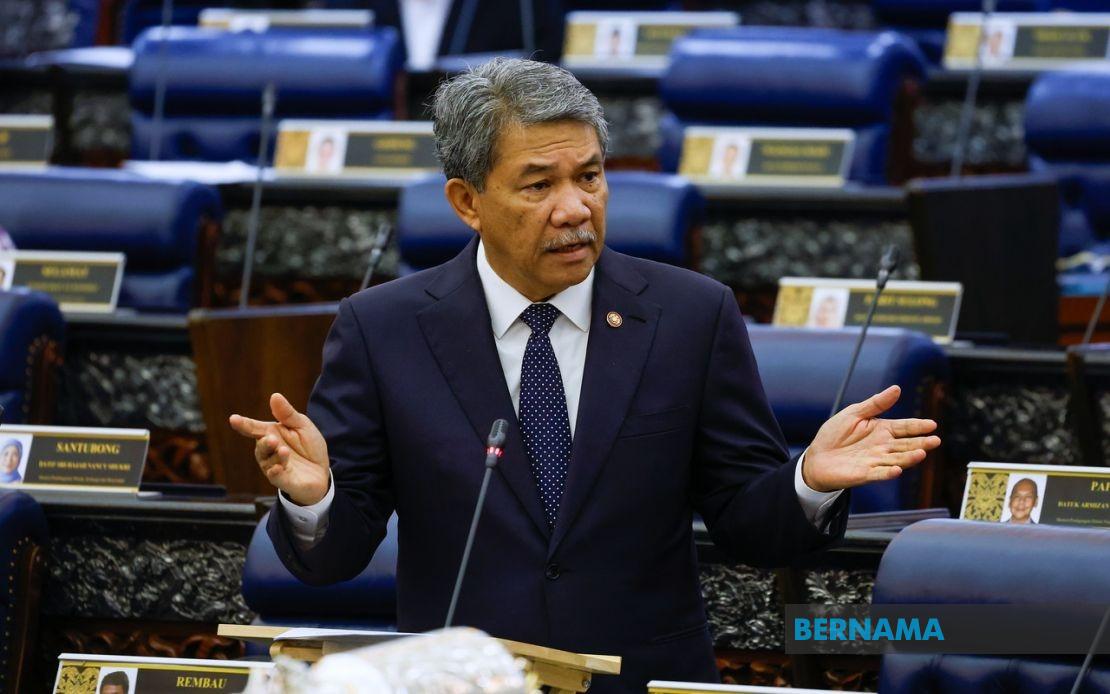
Southeast Asia's diplomatic bloc is recalibrating its strategy on Myanmar, acknowledging that existing frameworks require recalibration to move the stalled peace process forward. Foreign Minister Datuk Seri Mohamad Hasan revealed on Tuesday that ASEAN leadership has tasked regional foreign ministers with exploring revised methods to strengthen implementation of the Five-Point Consensus, the region's primary diplomatic vehicle for addressing Myanmar's ongoing political turmoil and armed conflict.
The Five-Point Consensus, originally adopted in April 2021 as Myanmar descended into chaos following the military coup, has served as ASEAN's foundational blueprint for resolving the crisis. However, more than three years later, the framework has struggled to generate meaningful progress, with Myanmar's ruling junta repeatedly failing to meet key benchmarks including the cessation of violence, dialogue with opposition forces, and the delivery of humanitarian assistance. This persistent stalemate prompted ASEAN leaders gathering at their 48th Summit in Cebu, Philippines last month to consider fresh approaches whilst preserving the consensus framework itself.
Mohamad clarified that rather than abandoning the Five-Point Consensus outright, ASEAN envisions foreign ministers working more closely with Myanmar's authorities to determine practical pathways for executing the agreement. This reflects a diplomatic shift from public pressure campaigns towards more intensive bilateral engagement, recognising that confrontational posturing has yielded limited returns with the Myanmar junta. The Malaysian foreign minister acknowledged that substantive modifications to the framework would require formal approval from ASEAN heads of state, suggesting any overhaul would involve considerable deliberation among all ten member nations.
A particularly significant Malaysian initiative involves extending Myanmar's current six-month ceasefire, scheduled to expire at the end of July, into a lengthier second phase that could scaffold more comprehensive peace negotiations. The ceasefire, implemented by Myanmar's military leadership, represents one of the few concrete outcomes achieved under the Five-Point Consensus framework. By extending this temporary truce, ASEAN hopes to create additional negotiating space and demonstrate to international partners that progress, however incremental, remains achievable through regional mechanisms rather than external intervention.
Crucially, Malaysia has also pressed Myanmar to articulate a transparent roadmap charting the peace process trajectory, encompassing structured dialogue involving all relevant parties from ethnic armed organisations to civil society representatives. The absence of such a roadmap has contributed to widespread scepticism among Myanmar's fractured opposition movements that any military-led reconciliation process carries genuine democratic substance rather than serving as propaganda cover for junta consolidation. Without inclusive dialogue that incorporates these marginalised voices, the legitimacy and durability of any eventual settlement remain highly questionable.
Underlying ASEAN's recalibration is a geopolitical concern that stretches beyond humanitarian considerations. Regional leaders fear that protracted Myanmar instability creates opportunities for external powers to exploit divisions and establish footholds in strategically vital territory. Mohamad explicitly warned that abandoning Myanmar through international isolation would create a power vacuum inevitably filled by third parties pursuing narrow geopolitical interests, thereby transforming a regional crisis into a broader great-power competition arena. This calculation reflects ASEAN's historical commitment to preserving regional autonomy from distant powers, whether China, India, or Western nations.
Malaysia's multilateral engagement strategy encompasses simultaneous dialogue with Myanmar's junta, the parallel National Unity Government established by ousted civilian politicians, the People's Defence Force leading armed resistance, and numerous ethnic armed organisations controlling territory along Myanmar's borders. This inclusive approach acknowledges that sustainable peace requires buy-in from military and non-military actors alike, though it complicates consensus-building considerably. The National Unity Government and People's Defence Force fundamentally reject the junta's legitimacy and have explicitly rejected ceasefire arrangements not accompanied by democratic restoration, creating obvious tensions with ASEAN's engagement of all parties equally.
For Malaysia and other ASEAN members, the stakes surrounding Myanmar's trajectory extend beyond diplomatic prestige. Myanmar's instability generates refugee flows straining neighbour nations' resources, disrupts regional supply chains and trade corridors, and creates conditions enabling transnational crime and arms trafficking. A protracted frozen conflict in Myanmar affects ASEAN's internal cohesion, as member states perceive the crisis differently based on geographic proximity and strategic interests. Thailand and Laos border Myanmar and experience direct consequences, whilst distant members prioritise ASEAN unity over pressure on the junta.
The diplomatic reorientation also reflects tacit acknowledgment that the Five-Point Consensus, designed as a short-term stabilisation framework, has been repurposed as a long-term conflict management mechanism for which it was never intended. The framework's vagaries regarding violence cessation, ceasefire enforcement mechanisms, and timeline expectations have permitted the junta considerable interpretive flexibility in demonstrating nominal compliance. Exploring new approaches essentially means developing more specific metrics and enforcement provisions that clarify what genuine implementation actually entails operationally.
Yet fundamental challenges persist unchanged. Myanmar's military leadership shows no indication of accepting democratic transitions or meaningful power-sharing arrangements. The National Unity Government and People's Defence Force possess limited military capacity to compel junta concessions through force. Economic sanctions imposed by Western nations lack ASEAN participation and generate domestic resistance within Myanmar. Under these constraints, even innovative diplomatic frameworks face formidable structural obstacles.
For Malaysian readers and the broader Southeast Asian audience, these developments signal that ASEAN recognises the inadequacy of maintaining status quo engagement whilst awaiting junta voluntary compliance. The shift towards foreign ministerial engagement and ceasefire extension represents pragmatic adjustment to intractable circumstances rather than breakthrough progress. Ultimately, sustainable Myanmar peace requires internal political will that external diplomacy cannot manufacture, though ASEAN's persistence in exploring revised strategies demonstrates the regional bloc's commitment to preventing Myanmar's complete international marginalisation.

