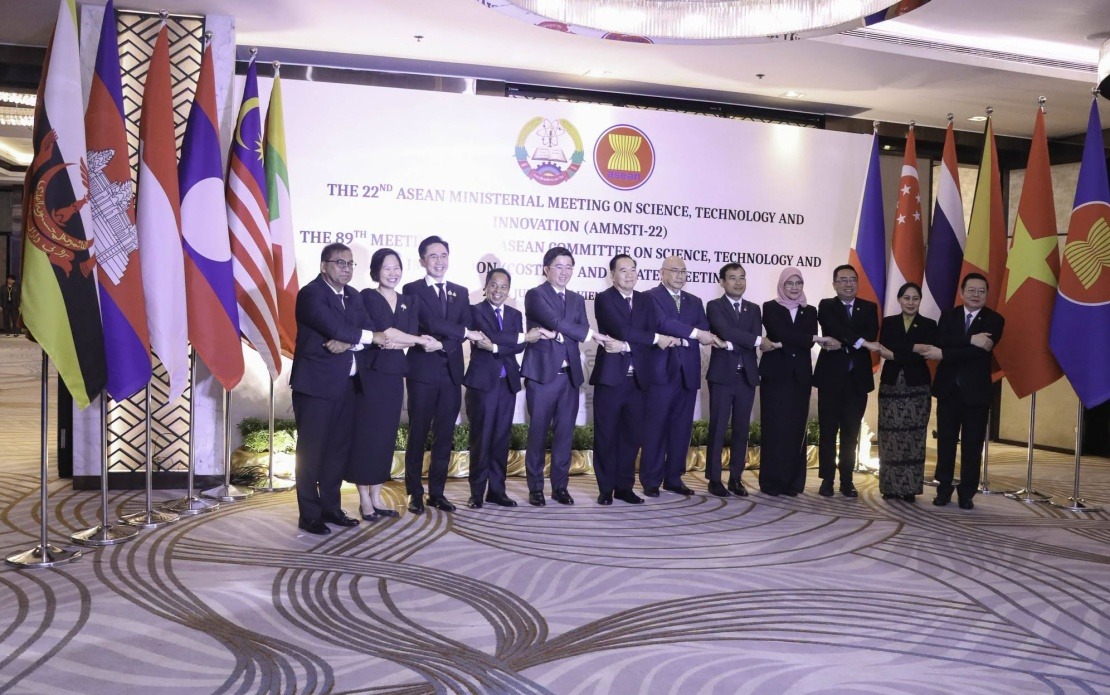
Malaysia has renewed calls for ASEAN to establish a more cohesive and purpose-driven science, technology and innovation architecture capable of tackling the region's most pressing challenges. Science, Technology and Innovation Minister Datuk Chang Lih Kang made these remarks during the 22nd ASEAN Ministerial Meeting on Science, Technology and Innovation in Vientiane, Laos, highlighting energy transition, food security, public health threats and climate adaptation as critical areas where regional cooperation could yield tangible benefits for all member states.
The push for a unified STI ecosystem reflects growing recognition across Southeast Asia that fragmented national research and innovation efforts leave the region vulnerable to global competition and unprepared for transnational challenges. Malaysia's advocacy signals a shift towards viewing science and technology not as individual national assets but as shared regional resources that can amplify each country's capabilities. This approach carries particular weight for smaller economies within ASEAN that lack the scale or capital to pursue cutting-edge research independently, making collaborative frameworks essential for technological advancement.
Beyond formal advocacy, Malaysia has proposed concrete mechanisms to realise this integration. The country highlighted initiatives to strengthen cross-border innovation platforms and create a more cohesive startup ecosystem across ASEAN, recognising that entrepreneurs and researchers increasingly operate beyond national borders. Equally important is ensuring that scientific discoveries and technological breakthroughs translate into real-world applications that improve people's lives, rather than remaining confined to academic journals or laboratory environments. This focus on practical impact reflects international best practice in innovation policy.
Malaysia's bilateral engagement with ASEAN Secretary-General Dr Kao Kim Hourn underscored the country's broader strategic objectives within the regional bloc. By preparing early for hosting the 23rd ASEAN Ministerial Meeting and the 91st Meeting of the ASEAN Committee on Science, Technology and Innovation next year, Malaysia is positioning itself as a serious steward of the region's technological agenda. The bilateral discussion prioritised ensuring that Malaysia's upcoming chairmanship will catalyse concrete progress rather than serving as a procedural formality, with officials identifying specific ways to strengthen institutional cooperation across ASEAN's STI portfolio.
The substance of multilateral discussions conducted during the Vientiane meeting reveals where ASEAN sees its future competitive advantages. Minister Chang met with counterparts from Singapore, Brunei and Thailand to explore collaboration across artificial intelligence, semiconductors, biotechnology, space technology and nuclear energy. The selection of these domains is deliberate—each represents either a critical dependency for ASEAN economies or an emerging frontier where regional players could establish significant technological footholds. Semiconductors remain vital to regional manufacturing competitiveness, while AI increasingly underpins productivity gains across sectors from agriculture to finance.
Biotechnology collaboration offers particular promise for ASEAN given the region's rich biodiversity and growing pharmaceutical manufacturing base. Several member states already possess sophisticated biotech capabilities, yet they operate largely in isolation rather than as a coordinated regional sector. A unified approach could enable knowledge-sharing, reduce duplicative research investment and accelerate the development of region-specific solutions—for example, vaccines and treatments tailored to endemic tropical diseases or crop varieties suited to Southeast Asian growing conditions. Similarly, space technology and nuclear applications, while seemingly advanced, have direct relevance to development priorities including climate monitoring, resource management and clean energy production.
Malaysia's emphasis on a "resilient, sustainable and competitive" STI ecosystem reflects broader regional preoccupations with balancing economic development against environmental preservation and social inclusion. The language signals that scientific innovation within ASEAN cannot pursue efficiency gains alone but must explicitly account for sustainability constraints and equitable outcomes. This framing matters for Malaysian business and policy circles, as it suggests future STI collaboration will increasingly embed criteria around climate impact, resource efficiency and social benefit alongside traditional metrics of technological advancement.
The timing of these discussions carries strategic significance. ASEAN economies face mounting pressure to upgrade technological capabilities to maintain competitiveness against China and India, while simultaneously managing the profound transitions triggered by global decarbonisation, supply chain restructuring and artificial intelligence adoption. A fragmented approach to innovation leaves ASEAN vulnerable to being perpetually downstream in global technology value chains. Conversely, a coordinated regional framework could elevate member states' bargaining power in international scientific partnerships and technology markets.
For Malaysian stakeholders, the implications extend across multiple sectors. Firms in semiconductors, electronics manufacturing and pharmaceuticals stand to benefit from deeper regional integration that reduces barriers to collaboration, talent mobility and knowledge exchange. Universities and research institutions could access larger funding pools and more robust networks for collaborative research. Startups operating in digital services, fintech and agritech could tap into a unified ASEAN market rather than navigating separate regulatory environments. The government's commitment to hosting AMMSTI-23 signals that policymakers view STI coordination as central to Malaysia's regional influence and economic future.
However, translating these ministerial statements into operational reality requires sustained commitment and institutional capacity. ASEAN's record on implementing cross-border initiatives remains mixed, with divergent development levels, regulatory frameworks and institutional capabilities creating obstacles to seamless cooperation. Member states must balance ambitions for regional integration against legitimate concerns about protecting national research capabilities and intellectual property. Success will depend on establishing clear governance structures, financing mechanisms and accountability frameworks that ensure collaborative projects deliver promised benefits.
The dialogue initiated in Vientiane represents an important step toward recognising that ASEAN's technological future need not be determined solely by external powers or individual national efforts. By promoting integrated approaches to science, technology and innovation, regional leaders are beginning to acknowledge that their collective voice carries weight in shaping the technological landscape. Malaysia's upcoming stewardship of this agenda offers an opportunity to move from aspirational statements to concrete institutional arrangements that can meaningfully strengthen ASEAN's position in the global innovation economy.

