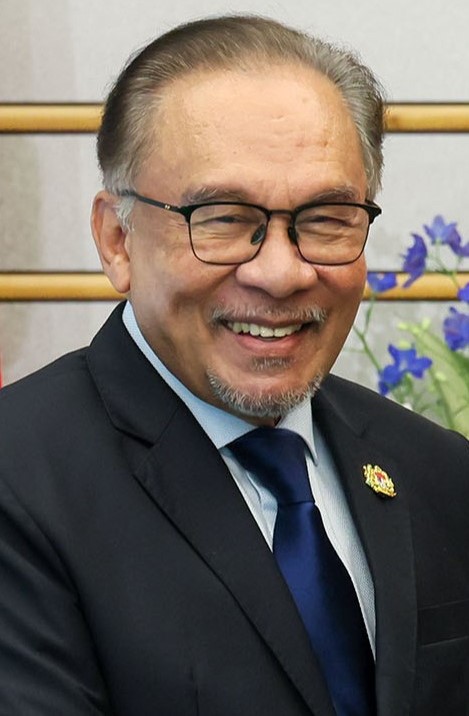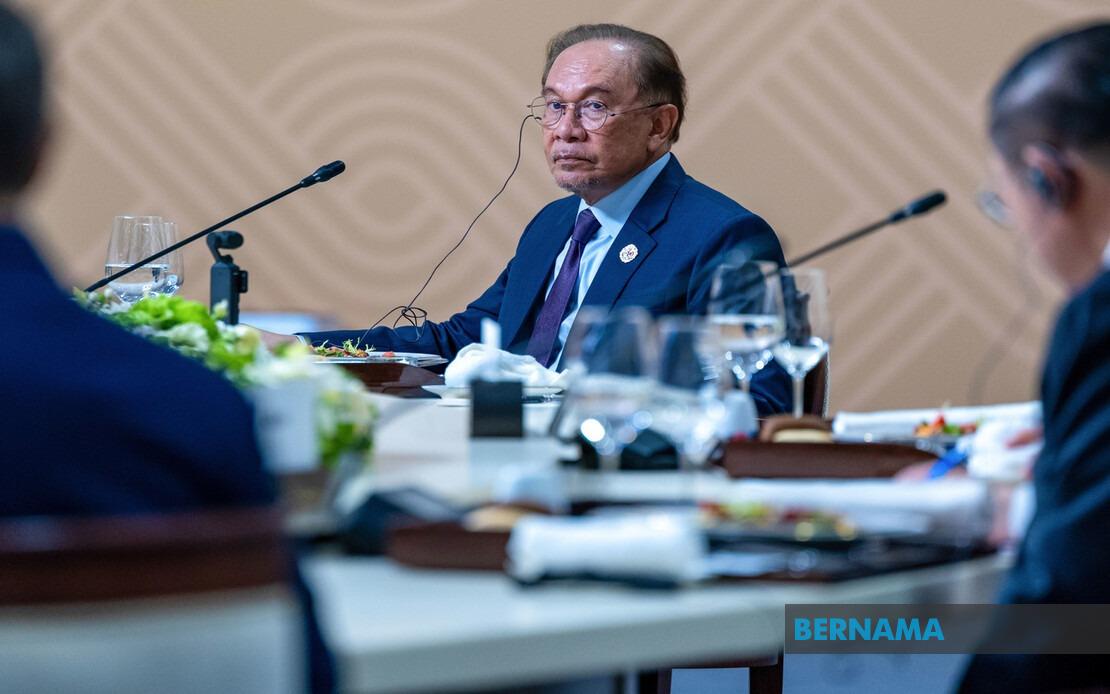
Prime Minister Datuk Seri Anwar Ibrahim has called for closer cooperation between ASEAN and the Shanghai Cooperation Organisation (SCO) on two of the region's most pressing challenges: cross-border crime and energy security. Speaking during an ASEAN-Russia working lunch in Kazan on June 18, Anwar stressed that both regional blocs possess the institutional machinery to address these transnational threats, but must coordinate their resources and intelligence more effectively to achieve tangible results.
The collaboration framework already exists through a 2005 memorandum of understanding between the two organisations that covers counter-terrorism, drug control, money laundering prevention, and energy cooperation. Anwar argued that the time has come for both blocs to move beyond symbolic agreements and focus resources on specific areas where measurable progress can be achieved within defined timeframes. This pragmatic approach reflects Malaysia's broader diplomatic strategy of prioritising outcomes over ceremonial declarations, a philosophy particularly relevant as transnational threats evolve faster than governmental responses can typically match.
The Prime Minister highlighted how digital-age criminality now poses unprecedented challenges for regional security. Online scams, illicit financial transfers, and human trafficking operations routinely cross borders with speeds that individual governments struggle to counter in isolation. By pooling intelligence-sharing capabilities and jointly building enforcement capacity, ASEAN and SCO member states could significantly enhance their ability to detect, investigate, and prosecute these crimes. This represents a departure from traditional bilateral cooperation models toward a more integrated regional approach, essential in an era where criminal networks operate on a transnational scale from the outset.
On the energy front, Anwar noted that the SCO membership includes several major energy producers and technological innovators with substantial expertise in power systems. For Malaysia and other ASEAN nations dependent on energy imports or seeking diversification, this opens avenues for practical collaboration on energy security and the transition toward cleaner power sources. The Prime Minister specifically identified several cooperation areas including energy efficiency, grid reliability, liquefied natural gas infrastructure, renewable energy integration, and knowledge exchange on safety standards. This agenda reflects growing concerns across Southeast Asia about energy resilience amid geopolitical tensions and climate imperatives.
Beyond the SCO framework, Anwar extended his call for deeper engagement to ASEAN's relationship with the Eurasian Economic Union (EAEU), an economic bloc comprising Russia, Belarus, Kazakhstan, Kyrgyzstan, and Armenia. He argued that existing frameworks between ASEAN and the EAEU should be leveraged to enhance business confidence and commercial ties, moving these relationships beyond government-level discussions into vibrant private-sector engagement. The Prime Minister identified private-sector regularity as the first priority, advocating that companies from both regions participate more actively in each other's major economic forums, including the Eastern Economic Forum and the St Petersburg International Economic Forum.
Small and medium enterprises represent a particular focus area, as these firms typically lack the market access, technology transfer opportunities, and technical skills to compete effectively in unfamiliar regional markets. By creating structured support mechanisms and facilitating technology partnerships, ASEAN and EAEU could unlock significant commercial potential while building stronger people-to-people links. This emphasis on inclusive economic cooperation distinguishes Anwar's approach from purely elite-level diplomatic engagement and suggests a longer-term vision of sustainable regional integration.
The Prime Minister identified emerging domains as a third pillar of ASEAN-EAEU cooperation: the digital economy, artificial intelligence, cybersecurity, and food security. These areas represent frontier challenges where both blocs have overlapping interests but limited existing mechanisms for coordination. The inclusion of food security reflects regional anxieties about supply chain vulnerabilities, particularly acute in Southeast Asia where agricultural products flow through complex global networks vulnerable to disruption. Digital economy and AI cooperation, meanwhile, acknowledge the technological revolution reshaping commerce and governance across Eurasia.
Anwar's remarks came during a two-day working visit to Kazan, the capital of Russia's Tatarstan region, where he attended the ASEAN-Russia Commemorative Summit. The timing underscores Malaysia's commitment to strengthening Southeast Asian engagement with major powers beyond traditional Pacific partnerships. By actively engaging in these multilateral forums, Anwar positions ASEAN as an indispensable player in regional architecture discussions rather than a passive observer of great-power competition.
The SCO itself, established in 2001, currently comprises ten full members including China, India, Russia, Iran, and several Central Asian states, alongside Afghanistan and Mongolia as observers. This diverse membership spanning multiple time zones and political systems makes coordination inherently challenging, yet this complexity also explains why resource pooling and intelligence sharing would yield substantial benefits. ASEAN's bridging position between these powers gives the bloc particular leverage in advancing pragmatic cooperation agendas.
For Malaysian policymakers and businesses, Anwar's emphasis on energy cooperation carries immediate relevance given the nation's strategic location along key energy supply routes and its energy consumption patterns. Similarly, the focus on combating cross-border crime addresses daily security challenges affecting Malaysian citizens, from online fraud victimisation to human trafficking networks. The integration of digital economy priorities also positions Malaysia to leverage its growing tech sector capabilities within broader Asian cooperation frameworks.
The call for enhanced ASEAN-EAEU engagement through private-sector channels could potentially open new markets for Malaysian exporters and investors, though substantial groundwork remains necessary to translate diplomatic language into commercial reality. Success will depend on whether subsequent ministerial discussions translate these principles into concrete mechanisms, funding allocations, and institutional arrangements. Anwar's articulation of specific, measurable objectives suggests a more serious approach than earlier multilateral declarations, potentially signalling genuine momentum behind ASEAN's broader strategic autonomy agenda and its efforts to maintain equidistant relationships with multiple global powers.