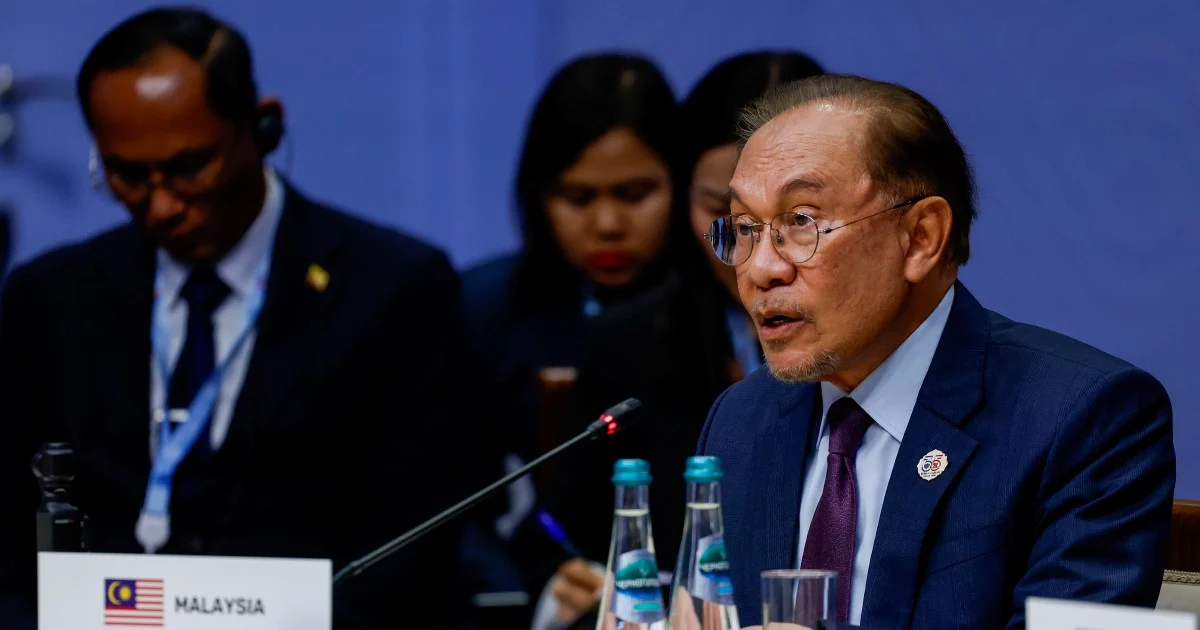
Prime Minister Anwar Ibrahim has called for major powers and international stakeholders to prioritise open channels of communication and diplomatic negotiations as the only viable means of achieving durable peace amid mounting geopolitical tensions worldwide. Speaking from Kazan, Anwar positioned dialogue not as weakness but as the fundamental mechanism through which nations can address grievances and chart paths away from escalating conflict.
The appeal arrives at a juncture when regional and global fault lines have widened considerably. Multiple flashpoints—from the South China Sea disputes to Middle Eastern hostilities and Ukraine-related standoffs—have strained diplomatic relations and triggered military posturing. Anwar's intervention reflects Malaysia's longstanding commitment to channelling tension through institutional frameworks rather than zero-sum confrontation, a stance rooted in the country's own experience navigating internal diversity and competing interests.
For Malaysia and other Southeast Asian nations, the emphasis on dialogue carries particular weight. The region relies extensively on freedom of navigation through contested waters and international trade routes. Escalating tensions between major powers directly threaten the stability and economic prosperity upon which smaller economies depend. By advocating for negotiated solutions, Anwar speaks to an immediate Malaysian and ASEAN interest in preserving the relatively rules-based international order that has underpinned regional growth over recent decades.
The Prime Minister's remarks underscore a recurring theme in Malaysian foreign policy: the nation consistently positions itself as a bridge-builder and honest broker among competing interests. This approach extends from Malaysia's role within ASEAN—where consensus-based decision-making requires extensive coordination—to its participation in broader multilateral forums. Anwar's emphasis on dialogue reflects not merely idealism but pragmatic recognition that Malaysia's influence and security depend on maintaining functional relationships across ideological and strategic divides.
Anwar's diplomatic overture also carries implications for how Malaysia calibrates its relationships with both Western and non-Western powers. In an environment where nations face pressure to choose sides, Malaysia's consistent advocacy for dialogue-based solutions provides political cover for engaging with all parties. This nuanced position has enabled Malaysia to extract benefits from various partnerships while avoiding the pitfalls of rigid alignment that could isolate the nation or compromise its strategic autonomy.
The call for sustained diplomatic engagement becomes particularly significant when considering military escalation trends. Recent years have witnessed increased defence spending across the region, naval exercises in contested zones, and rhetorical posturing that occasionally veers into dangerous territory. History demonstrates repeatedly that escalatory spirals, once initiated, acquire momentum difficult to arrest. By insisting on the primacy of dialogue, Anwar advocates for reversing this trajectory before military incidents or miscalculations create irreversible consequences.
Southeast Asia's experience with regional conflicts—including the Vietnam War and various maritime disputes—illustrates both the catastrophic costs of military confrontation and the possibility of managing disagreements without open warfare. Malaysia's own approach to resolving the Sabah dispute with the Philippines, despite historical animosity, demonstrates commitment to legal frameworks and negotiation. Anwar's Kazan remarks project this principle onto the global stage, suggesting that international disputes, however intractable they appear, warrant extended diplomatic effort.
The backdrop of Anwar's intervention includes contemporary concerns about proxy conflicts, arms races, and the potential for great-power competition to engulf smaller nations. ASEAN members, despite diverse political systems and alignments, share interest in preventing their territories from becoming battlegrounds or vassal states in larger power competitions. By amplifying calls for dialogue, Anwar articulates a position resonating across much of Southeast Asia, where nations seek space for autonomous decision-making rather than subordination to external powers.
Anwar's emphasis on dialogue also reflects awareness that military solutions invariably produce new problems alongside any purported gains. Interventions in various Middle Eastern theatres, for instance, have generated instability, humanitarian crises, and radicalization that persists decades after initial military actions. The humanitarian and economic costs of sustained conflict—refugee flows, disrupted trade, weapons proliferation—extend far beyond immediate combatant nations. For Malaysia and other trading nations, these ripple effects directly compromise development and stability.
Moving forward, Malaysia's advocacy for dialogue-centred approaches to international tensions will likely intensify. As ASEAN chair and as a non-permanent United Nations Security Council member, Malaysia possesses platforms to advance these principles institutionally. The effectiveness of such efforts depends partly on whether major powers demonstrate genuine commitment to negotiated settlements rather than treating diplomacy as tactical positioning between military confrontations.
Anwar's Kazan statement should be understood as both principled commitment and practical necessity. For Malaysia and the broader Southeast Asian region, a world characterized by dialogue and negotiated compromise over military confrontation offers the only pathway toward sustained prosperity and security. The challenge lies in persuading major powers to view their interests through similarly long-term, strategically patient lenses—recognizing that sustainable peace ultimately serves all parties better than temporary military advantages.

