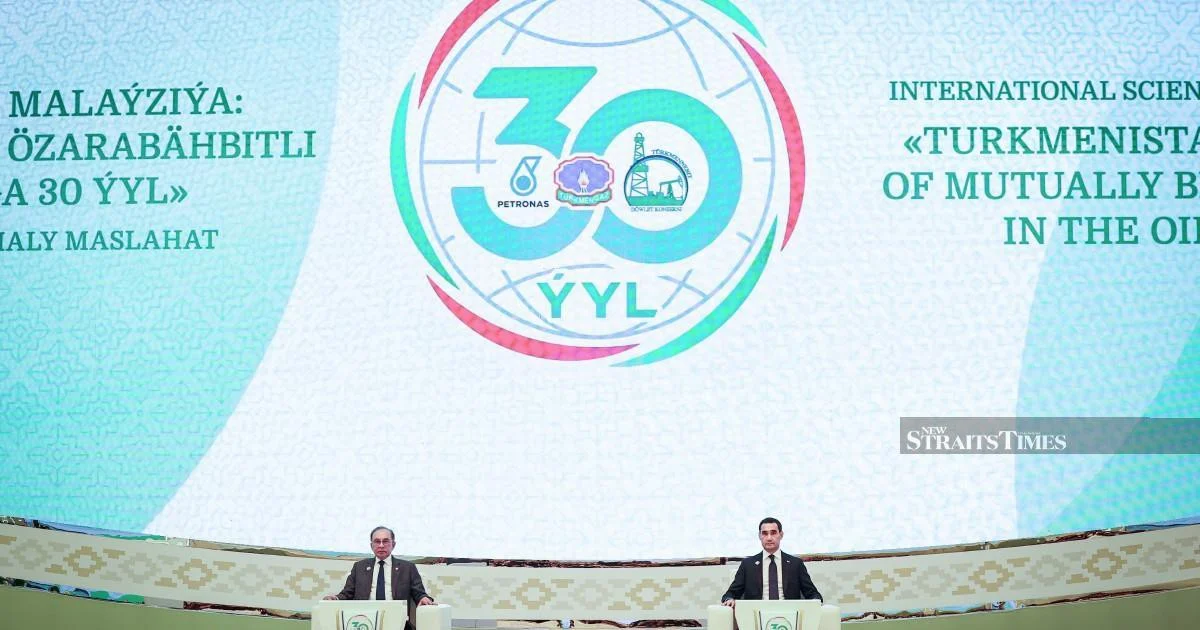
Prime Minister Datuk Seri Anwar Ibrahim's recent journey through Russia and Turkmenistan has delivered tangible results that extend well beyond conventional diplomatic courtesy, establishing crucial partnerships in energy infrastructure and hydrocarbon exploration that carry profound implications for Malaysia's economic trajectory and Southeast Asia's broader energy security framework.
The diplomatic offensive into two major energy-producing nations represents a calculated shift in Malaysia's foreign policy orientation, signalling the government's commitment to strengthening bilateral relationships with hydrocarbon-rich economies. Rather than concentrating energy engagement within traditional ASEAN frameworks, the administration has recognized that accessing Central Asian and Russian energy resources directly could provide the nation with enhanced supply security and investment opportunities that complement existing regional partnerships.
Energy security has become increasingly central to Malaysia's development strategy, particularly as the country navigates demographic growth, industrial expansion, and the transition toward cleaner energy sources. The breakthroughs achieved during these state visits demonstrate recognition that securing long-term hydrocarbon partnerships through high-level engagement can stabilize energy costs, attract downstream investment, and strengthen Malaysia's position as a regional energy hub. This multifaceted approach acknowledges that while renewable energy will play an expanding role in Southeast Asia's energy mix, traditional fossil fuels will remain essential during the transition period.
Russia, despite international sanctions that have reshaped its economic relationships, continues controlling vast petrochemical reserves and technological expertise in deep-water exploration and extraction. By establishing strengthened ties with Moscow, Malaysia gains access to partnership models that could unlock value in complex offshore projects while also positioning itself as a neutral diplomatic bridge between Western interests and Eurasian energy producers—a role that carries significant strategic weight in contemporary geopolitics.
Turkmenistan's significance extends beyond its status as one of Central Asia's largest natural gas exporters. The nation sits along critical pipeline corridors connecting hydrocarbon supplies from the Caspian Sea region to Asian markets. Reinforcing bilateral cooperation with Ashgabat opens potential pathways for Malaysian companies to participate in exploration, development, and transportation infrastructure projects that could reshape regional energy flows for decades. Such involvement would diversify Malaysia's investment portfolio while simultaneously enhancing the nation's technical capabilities in complex energy infrastructure.
For Malaysian downstream industries, these partnerships carry substantial commercial implications. Greater access to competitively priced crude oil and natural gas would provide petrochemical manufacturers, fertilizer producers, and power generation facilities with improved input costs and supply reliability. This advantage could enhance competitiveness against regional competitors in South Korea, Thailand, and Indonesia, while potentially attracting additional foreign direct investment into Malaysia's energy-dependent manufacturing sectors.
The diplomatic achievements also reflect Prime Minister Anwar's personal commitment to economic statecraft, leveraging his reputation as a respected international figure to negotiate agreements that might have proven difficult for predecessors. His standing within various international forums has enabled direct access to decision-making circles in Moscow and Ashgabat, facilitating conversations that translate into concrete commercial arrangements rather than ceremonial declarations.
These energy breakthroughs occur within a complex geopolitical context where Southeast Asian nations are increasingly balancing relationships between competing great powers. Malaysia's success in strengthening ties with Russia and Central Asian producers without alienating Western partners or provoking regional tensions demonstrates sophisticated diplomatic navigation. The country positions itself as pragmatic rather than ideologically driven, pursuing national interest through diversified partnerships rather than zero-sum alignment.
The implications extend beyond immediate energy supply chains. Successful engagement with Turkmenistan and Russia establishes templates for Malaysian companies seeking international expansion, demonstrates the nation's capacity to conclude complex infrastructure deals, and enhances national prestige within international business circles. These intangible benefits accumulate over time, creating reputational advantages that attract additional partnerships and investment flows.
Furthermore, these partnerships align with Malaysia's stated commitment to the ASEAN economic agenda by securing energy inputs that would benefit not only domestic industries but potentially support the broader regional economic development through competitive input costs. As ASEAN nations collectively seek economic resilience and growth during uncertain global conditions, securing diversified energy sources represents a strategic imperative that benefits the entire region through Malaysia's intermediary role.
Looking forward, the success of these visits underscores the value of sustained diplomatic engagement with energy producers across different geopolitical spheres. Malaysia's ability to develop productive relationships simultaneously with established partners and emerging energy superpowers strengthens the nation's negotiating position in future global commerce and positions it advantageously for the energy transitions anticipated throughout the coming decades. The groundwork established during these state visits will likely generate concrete commercial opportunities across multiple sectors for years to come, benefiting Malaysian businesses and workers while enhancing national energy security and economic resilience.

