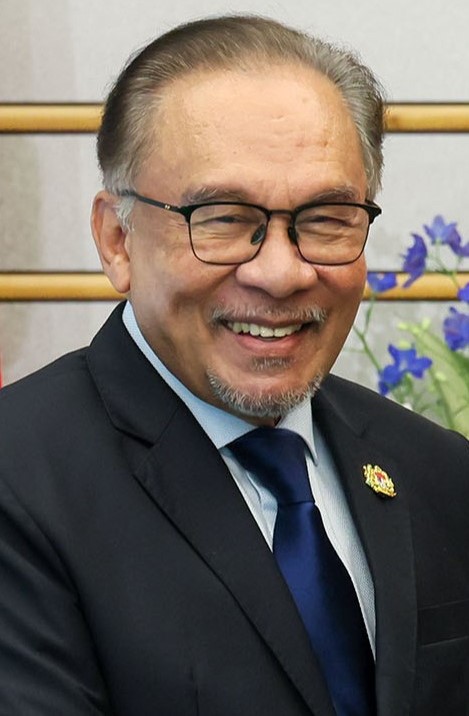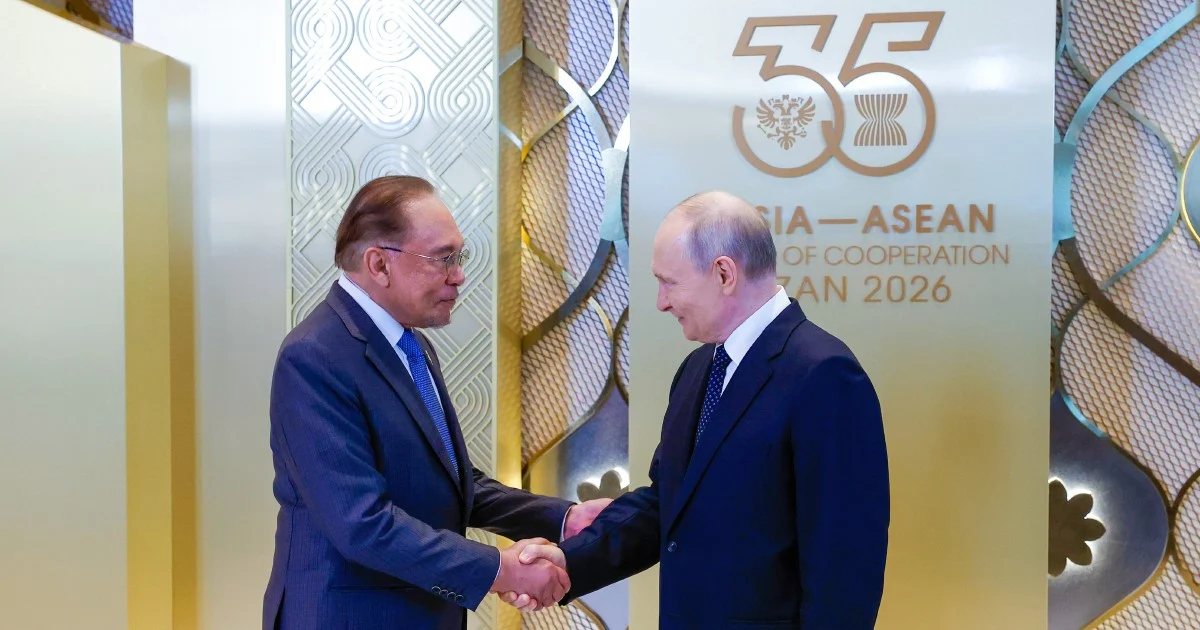
Prime Minister Datuk Seri Anwar Ibrahim and Russian President Vladimir Putin convened in Kazan to discuss reinforcing the long-standing partnership between Malaysia and Russia, with particular emphasis on energy sector collaboration and financial innovation in commercial ties. The meeting underscored both nations' commitment to broadening economic engagement at a time when geopolitical realignments are reshaping regional trade patterns across Asia and Europe.
Energy security emerged as a central theme in the bilateral dialogue, reflecting Malaysia's strategic interests in securing stable and diversified fuel supplies while Russia seeks reliable markets for its vast hydrocarbon reserves. For Malaysia, whose economy remains substantially dependent on imported energy and which plays a pivotal role in regional energy markets through its petrochemical and refining sectors, the discussions hold significance for long-term supply chain resilience. Russia's position as one of the world's largest energy exporters makes it a natural partner for Malaysia to explore deeper integration in oil and liquefied natural gas sectors, particularly as Southeast Asian demand continues to expand.
The consideration of trade denominated in local currencies represents a pragmatic response to contemporary international financial constraints and the broader shift toward de-dollarization gaining momentum among emerging market economies. Malaysia, which maintains trade relationships across multiple regions, has strategic reasons to explore alternative settlement mechanisms that reduce exposure to currency fluctuations and geopolitical constraints on dollar-based transactions. This approach aligns with similar initiatives undertaken by other major Asian economies seeking financial autonomy and hedging against external monetary pressures.
For Malaysia, deeper energy cooperation with Russia carries implications beyond immediate commercial gains. The nation's energy sector serves as a foundation for downstream manufacturing, including petrochemicals and specialty products that feed into regional supply chains. Enhanced collaboration could potentially strengthen Malaysia's position as a regional energy hub while diversifying supply sources away from traditional Middle Eastern partners. This diversification strategy supports Malaysia's broader foreign policy objective of maintaining balanced relationships across multiple poles of power.
Russia, meanwhile, pursues economic partnerships in Asia as Western sanctions and geopolitical tensions limit its engagement with traditional European and North American markets. The Russian Federation views Southeast Asia, including Malaysia, as a crucial market for energy exports and a platform for expanding economic influence in a region increasingly central to global prosperity. Malaysia's role as a significant regional economy and a non-aligned voice in international affairs makes it an attractive partner for Moscow's regional strategies.
The discussions in Kazan should be understood within the context of Malaysia's independent foreign policy framework, which emphasizes bilateral relationships based on mutual benefit rather than bloc alignment. Prime Minister Anwar Ibrahim has consistently advocated for maintaining Malaysia's autonomy in navigating relationships with major powers, and the energy-focused dialogue reflects this pragmatic approach. By engaging substantively with Russia on economic matters, Malaysia reinforces its position as a nation capable of constructing beneficial partnerships regardless of broader geopolitical tensions.
Trade between Malaysia and Russia has historically remained modest compared with Malaysia's commerce with other major economies, suggesting considerable potential for expansion. Structural barriers, including transportation costs, limited direct shipping routes, and historical commercial patterns favouring other partners, have constrained bilateral exchange. However, deliberate policy coordination and investment in energy infrastructure could gradually shift these dynamics. The Kazan meeting signals both governments' willingness to transcend these historical limitations.
Currency denominated trade mechanisms also address practical considerations for both economies. Malaysia's diversified trading profile benefits from flexibility in settlement arrangements, while Russia faces constraints in accessing conventional international banking channels. Bilateral currency arrangements reduce reliance on intermediaries and potentially lower transaction costs, creating mutual advantages that could incentivize increased commercial activity. Such mechanisms also strengthen the bilateral relationship by creating structural interdependencies that reinforce political cooperation.
The energy security agenda assumes particular relevance given global supply chain disruptions and the ongoing European energy crisis stemming from geopolitical tensions. While Malaysia itself faces different energy challenges, the global context influences pricing and availability of energy resources. Russian participation in Southeast Asian energy markets could contribute to regional price stability while offering Russia reliable customers for its exports. This mutually beneficial arrangement demonstrates how bilateral cooperation can address shared interests despite divergent positions on broader international issues.
Looking forward, the outcomes of the Anwar-Putin discussions may establish frameworks for expanded cooperation that extend beyond energy into complementary sectors. Malaysian expertise in refining, petrochemical production, and downstream energy industries could attract Russian investment, while Russian capital and technology might support Malaysian energy sector development. Such sectoral deepening would transform energy dialogue into broader economic partnership with lasting impact on regional trade patterns.
The meeting also reflects Malaysia's pragmatic engagement strategy with major powers. Rather than joining coalitions that demand alignment on all issues, Malaysia pursues issue-specific cooperation where mutual interests align. This approach maximizes benefits while preserving flexibility in Malaysia's foreign policy orientation. As global economic structures continue evolving, such differentiated partnerships become increasingly valuable for developing economies seeking to optimize their international positioning without sacrificing autonomy or principles.