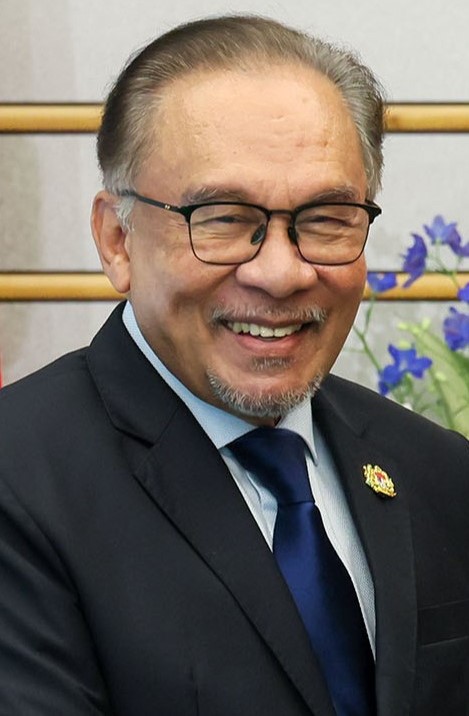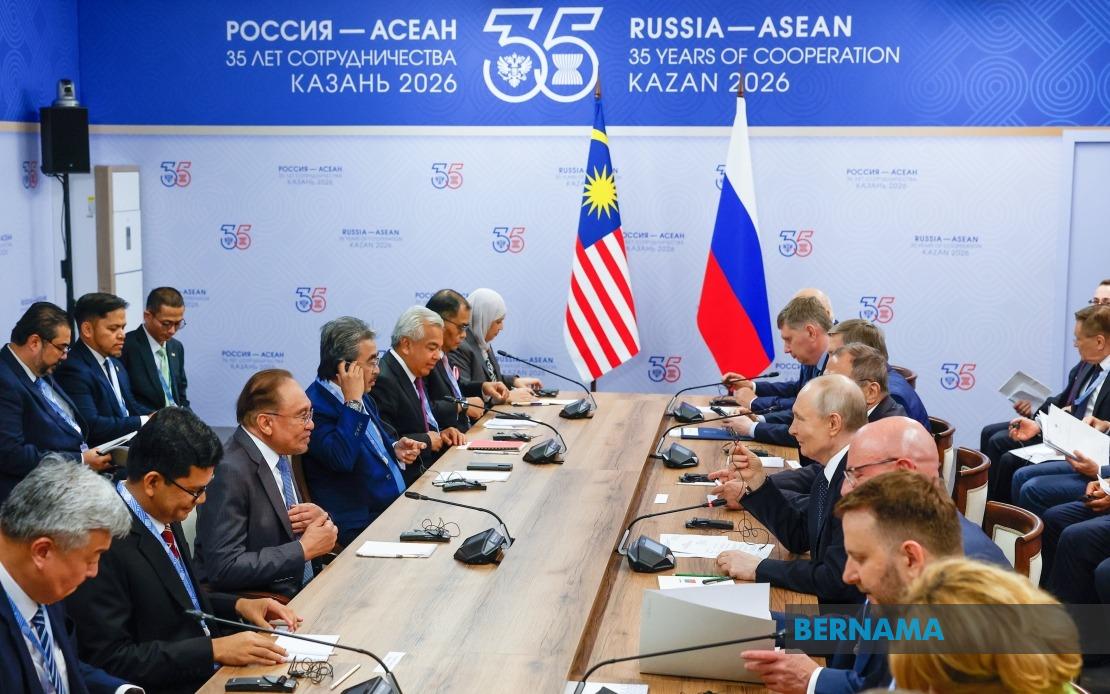
Prime Minister Datuk Seri Anwar Ibrahim has publicly commended Russian President Vladimir Putin and Chinese President Xi Jinping for taking principled stances on peace and condemning atrocities affecting civilians across the Middle East. Speaking during an exclusive interview with the Russian international broadcaster RT, conducted on the sidelines of his official visit to Kazan, Anwar highlighted the importance of major powers voicing support for diplomatic resolution and humanitarian principles in addressing the ongoing regional conflicts.
The remarks came as Anwar attended the Commemorative Summit marking the 35th anniversary of ASEAN-Russia relations, a gathering that underscored Malaysia's commitment to engaging with diverse global actors despite escalating geopolitical tensions. His decision to grant the interview to a Russian state media outlet, while simultaneously acknowledging China's diplomatic positioning, reflected Malaysia's deliberate strategy of maintaining engagement across multiple power centres without sacrificing its stated principles on human rights and international law.
Anwar emphasised that Malaysia has maintained a consistent and principled stance against military aggression in the region, particularly regarding actions supported by the United States. He noted that the Malaysian Parliament had taken a bipartisan decision to oppose such aggressions and that Malaysia continues to pursue engagement with relevant stakeholders as a pathway toward equitable resolution. This approach reflects the government's belief that diplomatic channels with multiple parties remain essential even amid polarisation on international platforms.
In articulating Malaysia's foreign policy framework, Anwar drew a distinction between neutrality and what ASEAN terms centrality, a concept that has gained prominence in regional discourse. He stressed that Malaysia and ASEAN explicitly reject the language of neutrality when confronting humanitarian violations, instead positioning themselves as independent actors committed to human rights principles. This nuanced stance allows the bloc to condemn atrocities without being perceived as aligned with any single superpower, a balance that Anwar acknowledges remains challenging to maintain in practice.
The Prime Minister revealed that he had engaged extensively with leaders from multiple countries including those in the Gulf region, Pakistan, Türkiye, and Iran as part of coordinated efforts to broker fair and lasting solutions to conflicts. These multilateral consultations demonstrate Malaysia's proactive diplomatic engagement beyond its traditional partnerships, reflecting an understanding that sustainable regional peace requires participation from actors with varying interests and influence. Such outreach also positions Malaysia as a constructive voice rather than a passive observer of major power dynamics.
A significant portion of Anwar's remarks focused on what he characterised as Western hypocrisy in selectively applying international principles. He questioned the logic of condemning certain military actions while tacitly accepting others when undertaken by allied states, arguing that this double standard undermines the credibility of international law and humanitarian frameworks. The Prime Minister specifically pointed to the contradiction between silence on aggression against Iran and vocal international concern regarding other regional developments, illustrating how inconsistent application of principles damages global governance structures.
Anwar acknowledged the complexity inherent in navigating such geopolitical issues, particularly for a nation seeking to maintain sovereignty and principled positions while managing relationships with major powers and regional actors. He stressed that Malaysia refuses to allow such complexity to justify silence on human rights violations or atrocities, a position that reflects domestic political consensus around foreign policy. This commitment to vocal advocacy despite diplomatic complications positions Malaysia within a particular strand of middle-power activism that prioritises consistency over convenience.
The Prime Minister's criticism extended beyond specific conflicts to encompass what he viewed as a broader failure of the international community to uphold core principles. He expressed concern that selective application of international law undermines the legitimacy of global institutions and encourages further breaches of established norms. This analysis reflects a perspective common among nations outside traditional Western alliance structures, which perceive double standards as endemic to contemporary international relations and argue that reform of global governance structures remains essential.
Anwar's emphasis on the ramifications of regional conflicts beyond immediate military dimensions highlighted Malaysia's concern with broader systemic effects. He referenced not merely the economic hardships resulting from warfare but the fundamental erosion of principles that sustain stable international order. This perspective situates Malaysia's activism within a longer-term strategic vision of preserving international law as a meaningful constraint on state behaviour, a concern that resonates particularly among smaller and medium-sized nations whose security depends partly on institutional frameworks rather than military capability.
The timing of Anwar's remarks, delivered during engagement with Russian leadership at an ASEAN-Russia commemoration, underscored Malaysia's deliberate cultivation of multiple diplomatic relationships despite rising US-China tensions. By publicly acknowledging Russian and Chinese diplomatic positions while based in Russia, Anwar signalled that Malaysia views cooperation across traditional bloc lines as both possible and necessary. This approach reflects a conviction that Southeast Asia's interests are best served through flexibility rather than alignment with any single power.
Looking forward, Anwar's diplomatic activism suggests that Malaysia will continue advocating for international consistency on humanitarian issues regardless of political pressures. The emphasis on ASEAN centrality as a conceptual framework indicates that the bloc may increasingly position itself as a counterweight to what its members perceive as inconsistent application of international norms. This stance carries implications for Malaysia's role in forthcoming regional forums and bilateral negotiations on conflict resolution, where consistency with stated principles may become an increasingly important currency in diplomatic dealings.