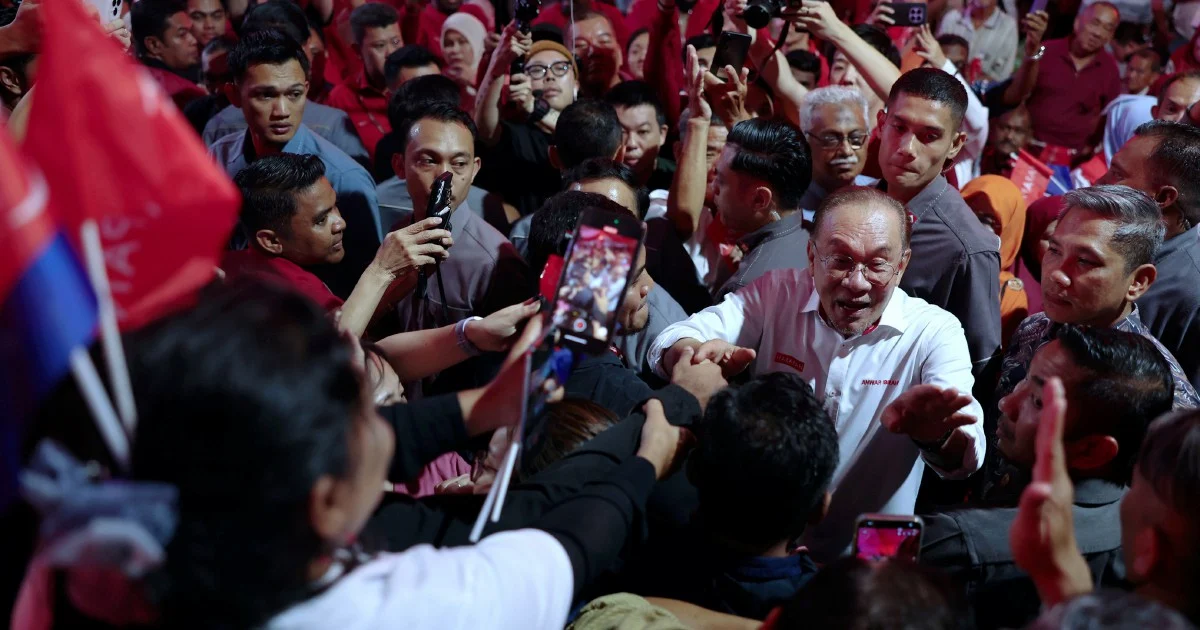
Pakatan Harapan's leadership formally presented its comprehensive slate of 56 candidates for the forthcoming Johor state election at a ceremony held in Tangkak, marking a crucial milestone as the coalition prepares for the contest scheduled for July 11. Coalition chairman Datuk Seri Anwar Ibrahim oversaw the unveiling, which represents the culmination of weeks of negotiations and deliberations among the three main component parties within the PH alliance.
The announcement carries significant weight for the opposition coalition, which has been recalibrating its political positioning in Johor following previous electoral setbacks in the state. PH's decision to contest all 56 seats across the Johor assembly demonstrates the coalition's determination to mount a comprehensive challenge to incumbent political forces, signalling renewed confidence after restructuring efforts undertaken at the national level.
Johor holds particular strategic importance within Malaysia's political landscape, given its status as the nation's second-most populous state and its historical significance as a traditional stronghold of particular political interests. The election serves as a consequential test of PH's appeal beyond its core support bases, particularly in assessing whether the coalition can expand its reach in traditionally competitive constituencies and rural heartlands where voter sentiment has proven volatile.
Anwar Ibrahim's personal involvement in unveiling the candidates underscores PH's emphasis on this state contest. His prominence as the coalition's figurehead sends a message about the priority assigned to Johor within broader national political calculations. The staging of the announcement in Tangkak, a constituency within Johor, was likely chosen to reflect the coalition's geographical focus and to emphasize engagement with local constituencies.
The composition of the 56-candidate lineup reflects careful consideration of factional interests within the PH alliance, which encompasses parties with distinct organizational structures and voter bases. The distribution of seats among component parties—traditionally involving complex negotiations over placement in winnable constituencies—has historically been a contentious process, requiring consensus-building mechanisms to prevent internal friction.
For Malaysian voters and political observers, the candidate roster provides insight into PH's strategic calculations regarding which constituencies merit significant resource allocation and which candidacies reflect efforts to broaden the coalition's appeal. The selection process reveals party leadership's assessment of electoral viability, demographic shifts, and organizational capacity in specific districts across the state.
The Johor election occurs within a broader context of electoral cycles affecting Malaysia's political trajectory. State-level contests provide crucial indicators of voter sentiment between general elections, offering platforms for coalition positioning and messaging refinement. The July 11 poll will test whether national developments have meaningfully altered the political preferences of Johor voters or whether entrenched patterns persist.
PH's commitment to fielding candidates across all 56 seats contrasts with approaches involving selective contestation or strategic withdrawals in certain constituencies. This comprehensive strategy suggests confidence in the coalition's organizational reach and financial capacity to mount simultaneous campaigns across geographically dispersed areas. It also reflects calculations about voter expectations and the reputational costs of appearing to concede territory without competition.
The unveiling ceremony provides PH with opportunities to communicate its policy agenda and vision for Johor governance through the platform of candidate presentations. How the coalition leverages this event to establish coherent messaging around development priorities, economic opportunities, and administrative reforms will influence subsequent campaign momentum during the lead-up to polling day.
Observers will scrutinize not only the candidate list itself but also the statements, background profiles, and policy positions articulated by PH leadership during the unveiling. These communications shape initial media narratives and provide voters with preliminary indicators regarding the coalition's approach to Johor's distinct governance challenges and opportunities.
The Johor election represents a significant test for PH's viability as a governing coalition at the state level. Success would strengthen the coalition's credentials heading toward broader political contests, while disappointing results could necessitate further strategic reassessment regarding messaging, candidate selection, and policy positioning in electorally pivotal states.
With the full slate now formally unveiled, PH enters the critical phase of campaign execution, where ground organization, resource deployment, and persuasion efforts will ultimately determine electoral outcomes. The coming weeks will reveal how effectively the coalition converts its candidacy announcements into voter mobilization and electoral support across Johor's diverse constituencies.

