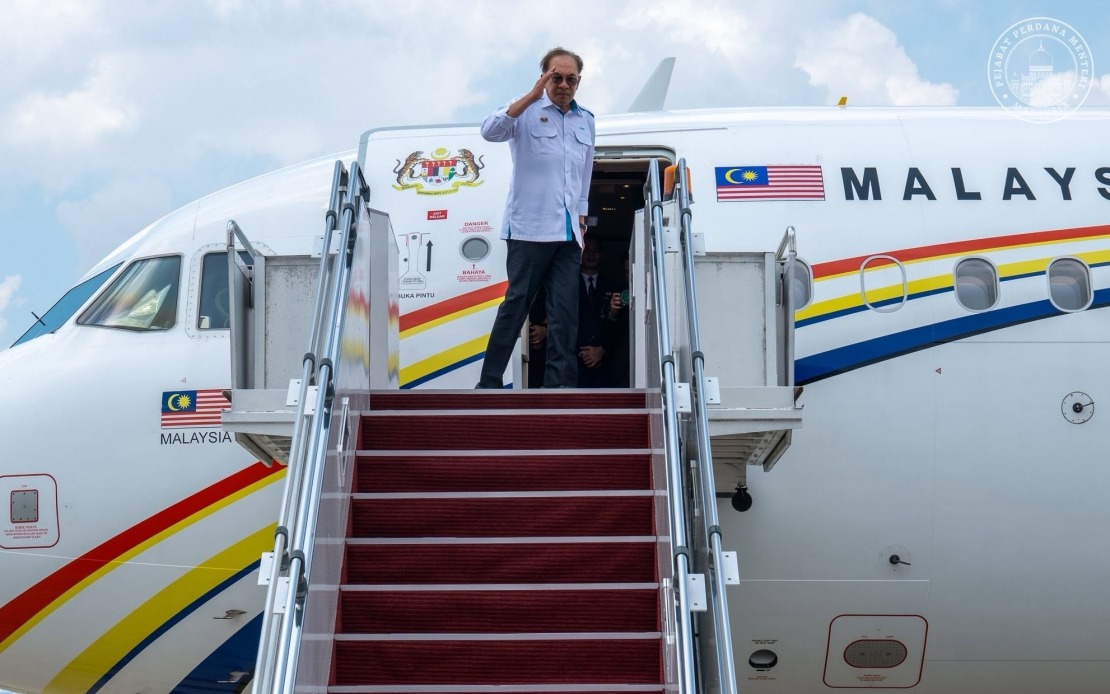
Prime Minister Datuk Seri Anwar Ibrahim departed Subang Air Base on Sunday to attend the ASEAN-Russia Commemorative Summit in Kazan, underscoring Malaysia's continued commitment to strengthening ties with Moscow at a time of shifting geopolitical dynamics in the region. The high-level visit, scheduled for June 17 to 18, represents a significant diplomatic engagement for the Malaysian leader as the Association of Southeast Asian Nations marks three and a half decades of formal relations with the Russian Federation.
The summit holds particular significance this year as it commemorates the 35th anniversary of ASEAN-Russia relations, which were formally established in Kuala Lumpur in 1991. The milestone offers both parties an opportunity to reflect on decades of cooperation while recalibrating their partnership for an increasingly complex geopolitical environment. For Malaysia, the timing reflects a broader strategic positioning within Southeast Asia that emphasises maintaining balanced relationships across multiple major powers, a cornerstone of the nation's foreign policy doctrine.
Anwar will lead a substantial delegation that includes Minister of Investment, Trade and Industry Datuk Seri Johari Abdul Ghani and Minister of Economy Akmal Nasrullah Mohd Nasir, signalling the economic importance Malaysia places on the engagement. The inclusion of trade and investment ministers alongside representatives from the Prime Minister's Office and Foreign Ministry indicates that discussions will extend well beyond ceremonial exchanges into substantive negotiations on bilateral and multilateral cooperation frameworks.
During his time in Kazan, the Prime Minister is scheduled to hold bilateral discussions with Russian President Vladimir Putin, providing a direct channel for addressing strategic interests and exploring deepened cooperation. Such high-level meetings are essential in modern diplomacy, allowing leaders to communicate intentions, build personal relationships, and establish frameworks for sustained engagement. The bilateral conversation will likely touch on how Malaysia and Russia can strengthen their partnership despite international pressures and competing regional priorities.
Beyond the bilateral meeting, Anwar's itinerary includes participation in the Russia-ASEAN Business Forum, an event designed to facilitate commercial connections between Southeast Asian enterprises and Russian counterparts. For Malaysian businesses, the forum represents an opportunity to explore partnerships in sectors ranging from natural resources to technology, while also showcasing Malaysian investment opportunities to Russian firms looking to expand into Southeast Asia.
The substantive agenda for the ASEAN-Russia summit encompasses a remarkably broad range of contemporary challenges and opportunities. According to the Ministry of Foreign Affairs, discussions will concentrate on deepening practical cooperation across multiple sectors, including trade and investment relationships that could unlock new economic growth pathways. Energy cooperation remains strategically significant, given Russia's role as a major global energy producer and ASEAN's substantial energy consumption requirements, particularly as the region transitions toward sustainable energy systems.
Food security has emerged as a critical discussion point for the summit, reflecting global supply chain vulnerabilities and the particular importance of agricultural stability for Southeast Asia's development. Russia's significant agricultural production capacity makes it a relevant partner in addressing regional food security concerns, especially as climate change and geopolitical disruptions create new uncertainties in global food systems. Similarly, digital economy advancement and technological innovation represent growth areas where ASEAN nations seek partnerships with technologically advanced countries.
The agenda's inclusion of science and technology cooperation signals recognition that innovation drives long-term competitive advantage and development outcomes. Educational exchanges and people-to-people contacts form the foundation of sustained diplomatic relationships, allowing future generations of leaders and professionals to develop mutual understanding and collaborative networks. Cultural and tourism cooperation, meanwhile, enhance soft power and create pathways for deeper societal engagement beyond formal government channels.
Following his programme in Kazan, Anwar will proceed to Ashgabat, Turkmenistan, for an official state visit at the invitation of President Serdar Berdimuhamedow. This extension of the diplomatic tour through Central Asia underscores Malaysia's broader engagement strategy in regions beyond its immediate Southeast Asian neighbourhood, reflecting the government's view that Malaysian interests extend across multiple geographic spheres. The Turkmenistan visit suggests coordinated high-level diplomacy across the greater Asia region, potentially addressing energy partnerships and connectivity initiatives relevant to Malaysian economic interests.
The simultaneous engagement with both Russia and Turkmenistan reflects Malaysia's pragmatic approach to maintaining diverse partnerships in an increasingly multipolar world. As great power competition intensifies in various regions, ASEAN nations like Malaysia navigate carefully to preserve strategic autonomy while building mutually beneficial relationships. The summit and accompanying bilateral engagements demonstrate how Malaysia balances participation in international institutions and multilateral forums with bilateral relationship management.
For Southeast Asia more broadly, the ASEAN-Russia summit represents an affirmation that the region maintains agency in its foreign relations despite external pressures. ASEAN's commitment to strategic autonomy and non-alignment with any single power bloc finds expression in forums like this, where the region engages with Russia on its own terms while maintaining relationships with other major powers. Malaysia's active participation and leadership role during these discussions underscore its continued importance within ASEAN diplomatic mechanisms.
The business forum component of the visit carries particular relevance for Malaysian investors and entrepreneurs seeking to diversify their international portfolios. Despite various international sanctions and restrictions on Russian business dealings, legitimate commercial opportunities remain available for ASEAN enterprises in sectors not subject to comprehensive restrictions. Malaysian companies in petrochemicals, palm oil, tourism, and professional services may identify partnership or supply chain opportunities through such forums.
The government's statement emphasising prayers for a successful visit reflects both the diplomatic seriousness with which Malaysia approaches such engagement and the cultural values that inform Malaysian public discourse. The hope expressed that the visits will bring maximum benefits and returns to the country encapsulates Malaysia's expectation that high-level diplomatic missions should translate into tangible advantages for Malaysian citizens and businesses. As Anwar's delegation departs, the international community will watch closely how ASEAN navigates its relationships with major powers while pursuing its own development agenda.
%22%2F%3E%3C%2Fpattern%3E%3C%2Fdefs%3E%3Crect%20width%3D%22100%25%22%20height%3D%22100%25%22%20fill%3D%22url(%23ph5xlmyg)%22%2F%3E%3Crect%20width%3D%22100%25%22%20height%3D%22100%25%22%20fill%3D%22url(%23ph5xlmyp)%22%2F%3E%3Ctext%20x%3D%2250%25%22%20y%3D%2250%25%22%20text-anchor%3D%22middle%22%20dominant-baseline%3D%22central%22%20fill%3D%22rgba(255%2C255%2C255%2C0.95)%22%20font-family%3D%22Georgia%2C%20'Times%20New%20Roman'%2C%20serif%22%20font-weight%3D%22700%22%20font-size%3D%22272%22%20letter-spacing%3D%22-0.02em%22%3EAnwar%3C%2Ftext%3E%3C%2Fsvg%3E)
%22%2F%3E%3C%2Fpattern%3E%3C%2Fdefs%3E%3Crect%20width%3D%22100%25%22%20height%3D%22100%25%22%20fill%3D%22url(%23phoa7ug)%22%2F%3E%3Crect%20width%3D%22100%25%22%20height%3D%22100%25%22%20fill%3D%22url(%23phoa7up)%22%2F%3E%3Ctext%20x%3D%2250%25%22%20y%3D%2250%25%22%20text-anchor%3D%22middle%22%20dominant-baseline%3D%22central%22%20fill%3D%22rgba(255%2C255%2C255%2C0.95)%22%20font-family%3D%22Georgia%2C%20'Times%20New%20Roman'%2C%20serif%22%20font-weight%3D%22700%22%20font-size%3D%22272%22%20letter-spacing%3D%22-0.02em%22%3EKuala%3C%2Ftext%3E%3C%2Fsvg%3E)