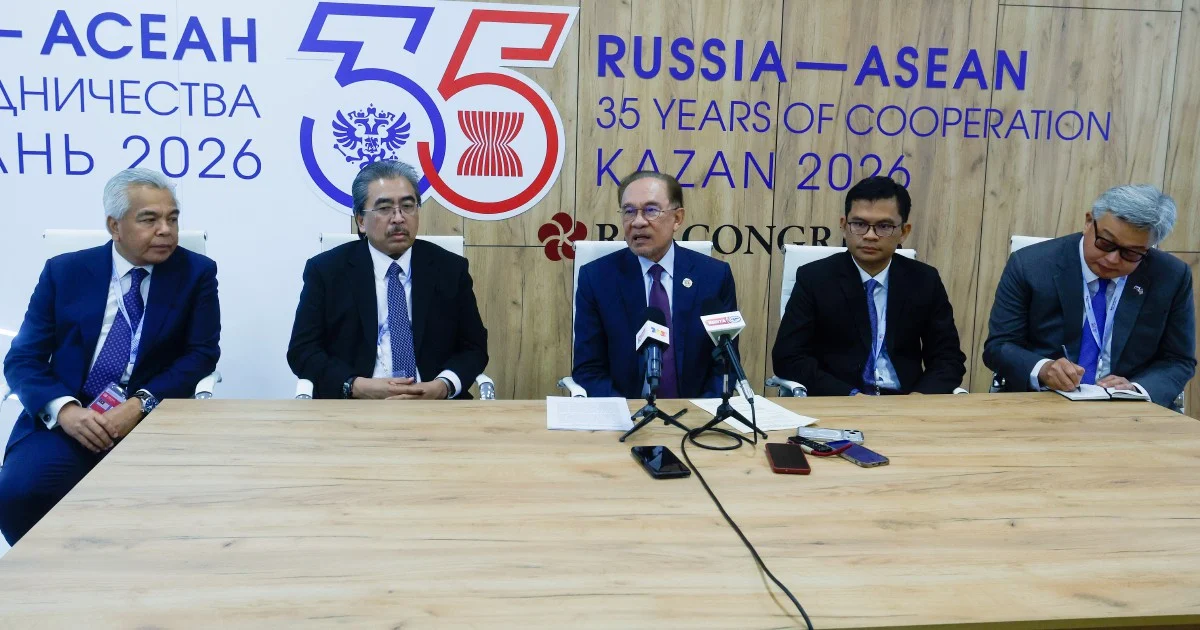
Prime Minister Datuk Seri Anwar Ibrahim has ordered government agencies to speed up the implementation of visa-free travel arrangements for Russian visitors, signalling a strategic pivot to revitalise Malaysia's tourism industry through expanded international market access. The directive, issued during Anwar's visit to Kazan, reflects Kuala Lumpur's determination to recapture tourism revenues by removing bureaucratic barriers that have historically limited visitor arrivals from major source markets.
The visa-free initiative targets Russian nationals, a demographic that historically contributed significantly to Malaysia's tourism receipts before geopolitical tensions and pandemic-related restrictions disrupted travel patterns. By enabling Russians to enter Malaysia without advance visa applications, the government aims to make the country a more competitive destination compared to regional alternatives. The move recognises that streamlined entry processes can materially increase leisure and business travel from source countries, translating directly into hotel occupancy, retail spending, and ancillary tourism services that generate employment across hospitality sectors.
Malaysia's tourism sector has progressively recovered following the severe contraction induced by the COVID-19 pandemic and subsequent border restrictions. However, full recovery to pre-pandemic visitor numbers remains elusive, particularly from long-haul markets such as Russia and Eastern Europe. The visa-free arrangement represents a tangible policy instrument to address this gap. Under such schemes, Russian citizens holding valid passports can typically enter Malaysia for specified periods—commonly 30 to 90 days—without pre-arrival visa documentation, reducing friction in travel planning and accommodation booking processes.
The geopolitical context surrounding Russia has added complexity to Malaysia's diplomatic calculations. As ASEAN's Chair in 2023 and a consistent proponent of non-alignment, Malaysia has maintained careful neutrality regarding international conflicts, positioning itself as a bridge nation rather than an adversary or aligned partner. Offering visa-free access to Russian tourists aligns with this diplomatic posture by treating Russia as a normal trading and tourism partner rather than a sanctioned entity. This approach distinguishes Malaysia's stance from Western nations that have imposed travel restrictions or visa complications on Russian citizens.
For Russian tourists, Malaysia offers distinctive appeal as a Southeast Asian destination combining tropical resort facilities, world-renowned diving spots in Sabah and Sarawak, and cultural attractions in Kuala Lumpur and Penang. The relaxation of visa requirements removes a significant impediment to spontaneous travel decision-making and reduces costs associated with visa processing. Market research indicates that visa-free or visa-on-arrival policies measurably increase tourist arrivals from source countries by simplifying the journey initiation process, particularly for leisure travellers who may otherwise choose competing destinations with less onerous entry requirements.
The expedition directive from Anwar implies that existing bureaucratic or inter-agency procedures will be accelerated rather than fundamentally restructured. Government departments responsible for immigration policy, security vetting, and foreign affairs coordination must align their timelines and eliminate unnecessary delays. This administrative push underscores the Prime Minister's priority on tourism as an economic stimulus lever, particularly important given Malaysia's reliance on services sector revenues and employment generation across regions dependent on visitor spending. The tourism ministry, immigration authority, and foreign affairs ministry will likely require explicit guidance to reprioritise this initiative within their competing responsibilities.
The broader strategic context involves Malaysia's positioning within ASEAN's regional tourism competition. Thailand, Indonesia, and Vietnam have collectively captured substantial Russian visitor flows, partly through simplified visa regimes and aggressive tourism marketing. By expediting visa-free access, Malaysia aims to capture a larger share of the Eastern European and Russian traveller segment, generating foreign exchange earnings and supporting hospitality sector employment. Tourism receipts constitute a material component of Malaysia's foreign exchange earnings and contribute to GDP growth, making sector revival a legitimate government priority following pandemic-related revenue collapses.
Implementation success will depend on several factors including security screening protocols that can authenticate visitors without creating delays, coordination between immigration checkpoints at major airports and land borders, and technology infrastructure enabling efficient passport scanning and documentation verification. The government must balance security imperatives—ensuring that visa-free access does not compromise border integrity or enable irregular migration—against the commercial objective of facilitating legitimate tourism flows. Regional best practices, particularly from Thailand's successful visa-free and visa-on-arrival programs, can inform Malaysia's approach to minimising processing times without compromising security standards.
Marketing and promotion will prove equally critical. Visa-free access alone will not automatically increase Russian visitor arrivals without concurrent campaigns highlighting Malaysia's tourism offerings. Tourism boards must coordinate with travel agencies, online platforms, and hospitality operators to ensure that simplified entry requirements are communicated effectively to Russian travel decision-makers. Investment in targeted advertising in Russian-language media and travel portals can amplify awareness of the visa-free opportunity and translate regulatory changes into tangible tourism demand increases.
The timing of this initiative aligns with global tourism recovery trajectories and Malaysia's broader economic diversification agenda. As traditional manufacturing and resource-dependent sectors face headwinds, services sectors including tourism, finance, and digital services represent growth opportunities. Anwar's administration has consistently emphasised economic regeneration and sector-wide revival, positioning tourism expansion as complementary to other growth initiatives including infrastructure development and foreign direct investment attraction.
Regional implications extend beyond Malaysia's bilateral relationship with Russia. The visa-free initiative may prompt competitive responses from neighbouring ASEAN nations seeking to maintain their market share of Russian tourists. It also reinforces Malaysia's consistent diplomatic positioning as a non-aligned nation capable of maintaining independent foreign policy preferences despite international pressures. This approach appeals to other non-Western nations and may enhance Malaysia's attractiveness as a tourism destination for visitors from emerging markets perceiving Western destinations as inhospitable.
Successful implementation could establish a template for visa-free or simplified-entry arrangements with other source markets, particularly emerging economies whose populations possess growing disposable incomes for international travel. The Russian visa-free initiative thus represents both a near-term revenue recovery strategy and a potential prototype for broader tourism market development. If executed efficiently and promoted effectively, it could meaningfully contribute to Malaysia's tourism sector revival while reinforcing the country's diplomatic positioning within international geopolitics.