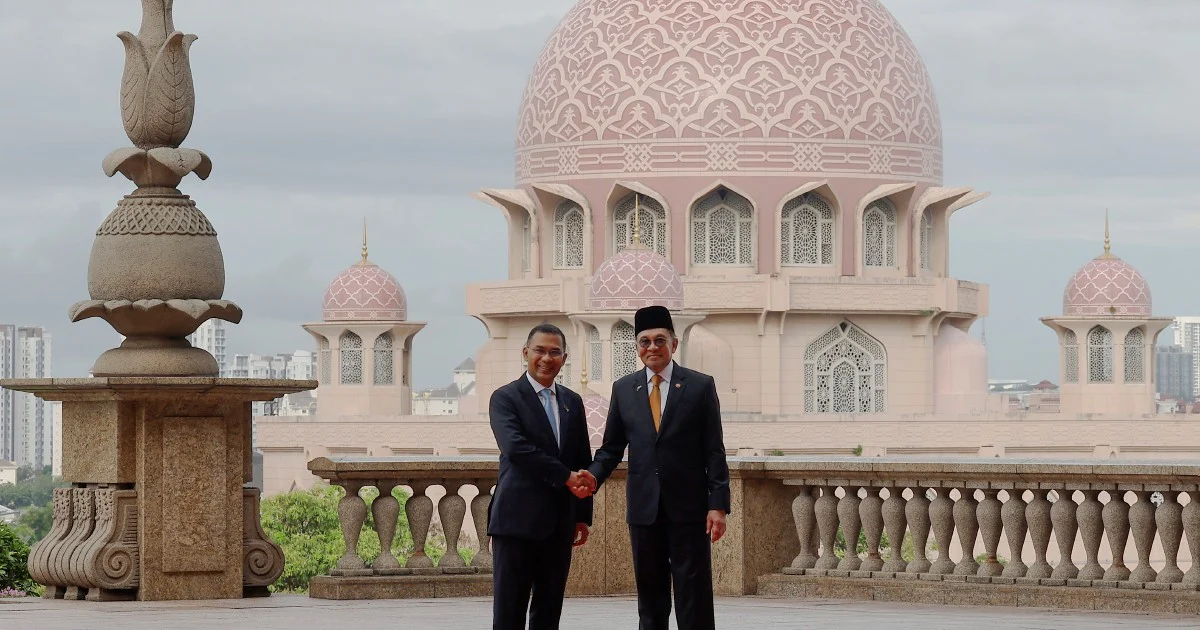
Prime Minister Anwar Ibrahim hosted Bangladesh Prime Minister Tarique Rahman at Putrajaya's Perdana Putra Complex on the opening day of the visiting dignitary's two-day official tour of Malaysia. The encounter represented a significant diplomatic engagement between the two nations and underscored their commitment to deepening bilateral relations during a period of considerable regional geopolitical activity.
The official welcome ceremony at the complex—Malaysia's administrative nerve centre—reflected the importance both governments attach to this high-level exchange. Such formal state visits typically involve extensive protocol arrangements and scheduled discussions on matters of mutual interest, signalling to both domestic and international audiences the priority placed on the bilateral relationship. For Bangladesh, engagement with Malaysia carries particular weight given Malaysia's economic stature, Islamic credentials, and established role within regional forums like ASEAN.
Tarique Rahman's timing in visiting Malaysia comes as Bangladesh navigates a complex transition period domestically. The Bangladeshi Prime Minister inherited leadership of the nation through electoral processes, and his diplomatic overtures abroad—particularly to established regional powers like Malaysia—serve to strengthen his government's standing both internationally and at home. Malaysia's reciprocal hospitality sends a clear signal of diplomatic recognition and partnership.
The state visit format employed here is Malaysia's traditional approach to welcoming international leaders of comparable stature. Ceremony at the Perdana Putra Complex carries symbolic weight, as this is the seat of the Prime Minister's official office and the locus of executive decision-making. The decision to stage the formal reception at this venue rather than at ceremonial spaces like the Istana Negara indicates a focus on substantive governmental engagement rather than purely ceremonial protocols.
For Malaysian policymakers, Bangladesh represents an important partner within the broader South Asian and Islamic world contexts. With a population exceeding 160 million people, Bangladesh constitutes a significant market and a nation of considerable strategic relevance. Deepening ties with Dhaka aligns with Malaysia's broader regional diplomacy strategy, which emphasises multi-directional engagement across South Asia, Southeast Asia, and the Middle East.
The two-day duration of the visit suggests an itinerary encompassing meetings with various Malaysian government ministers, business delegations, and possibly cultural or educational exchange discussions. Such visits typically include bilateral talks at the ministerial level, allowing leaders to address shared concerns ranging from trade and investment to security cooperation and cultural matters. The breadth of such engagements provides opportunities to identify convergence points and explore new avenues for mutual benefit.
Bilateral trade relations between Malaysia and Bangladesh have grown steadily, with Malaysian companies increasingly investing in Bangladesh's burgeoning manufacturing sector, particularly in garments and textiles. Conversely, Malaysian financial institutions and investors have identified Bangladesh as an emerging market with considerable development potential. Official visits of this calibre often catalyse discussions on expanding these economic ties, potentially announcing new investment commitments or trade agreements.
From a regional perspective, the visit reflects broader patterns of engagement within South and Southeast Asia. Malaysia's diplomatic calendar regularly includes high-level visits from major South Asian players, demonstrating the nation's commitment to being a bridge between regions. This positioning has long been central to Malaysian foreign policy under successive governments, and the Anwar administration has continued this tradition with renewed emphasis on strengthening institutional links.
Diplomatic visits between nations at this level typically address regional security matters as well. Both Bangladesh and Malaysia have interests in maritime security, counterterrorism cooperation, and the preservation of stable trade routes. The Strait of Malacca—critical to global commerce—affects both nations' security calculations, making cooperation on maritime governance and freedom of navigation matters of mutual concern.
The formal welcome extended by Anwar Ibrahim carries additional significance given Malaysia's current international standing. Under the Anwar administration, Malaysia has sought to rebuild relationships and reposition itself as a credible, forward-looking voice within regional and global affairs. High-level bilateral visits serve this agenda by demonstrating the nation's capacity to maintain productive relationships across diverse geopolitical contexts.
Cultural and people-to-people exchange dimensions of such visits are equally significant. Malaysia's Islamic heritage and multicultural society resonate with Bangladesh's predominantly Muslim population, facilitating discussions on religious cooperation, educational partnerships, and tourism promotion. Universities, research institutions, and civil society organisations often benefit from the momentum generated by state visits, as follow-up mechanisms are established to deepen institutional connections.
The visit also provides both nations with platforms to address any outstanding bilateral issues while affirming shared values and complementary interests. These informal discussions, often conducted away from public scrutiny, frequently prove as consequential as formal ceremonial events. As the visit progresses through its second day, further developments are anticipated regarding the substantive outcomes of bilateral engagements.

