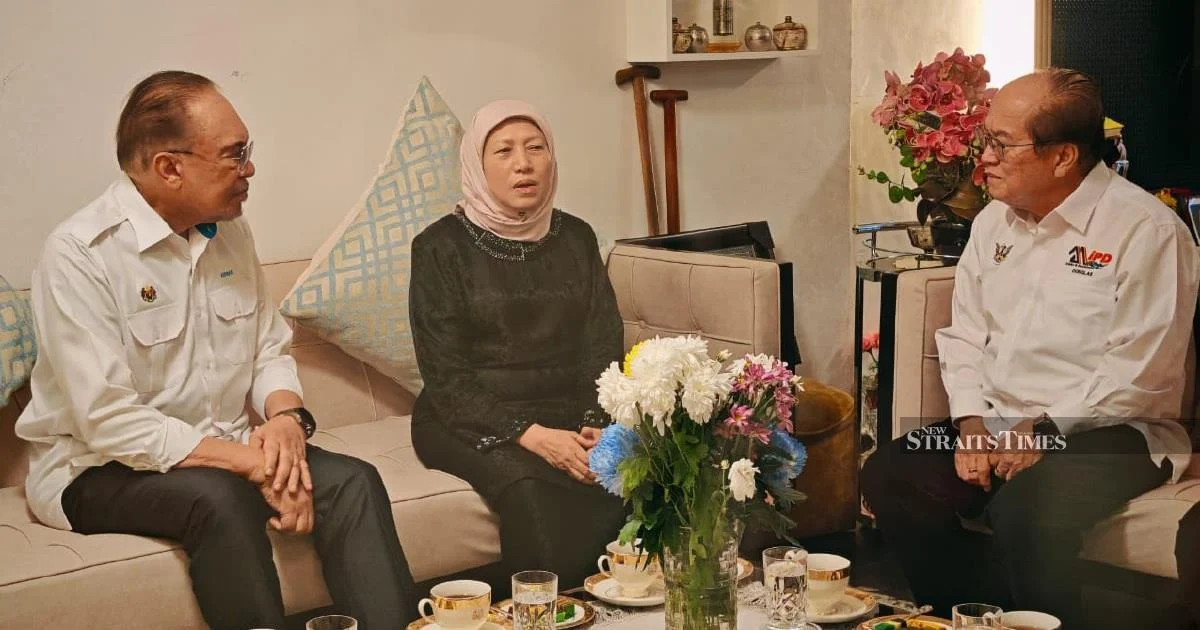
Prime Minister Datuk Seri Anwar Ibrahim travelled to Kuching to personally convey his condolences to Women, Family and Community Development Minister Datuk Seri Nancy Shukri following the death of her husband, Datuk Kamil Misuari. The gesture underscores the significance of personal support within Malaysia's political leadership during periods of family loss, particularly when senior cabinet ministers are affected.
Nancy Shukri has served in her ministerial capacity overseeing critical portfolios related to women's development, family welfare, and community engagement across Malaysia. Her role places her at the intersection of social policy and grassroots advocacy, requiring her to champion issues affecting vulnerable populations and support systems nationwide. The loss of a spouse represents a profound personal challenge for any individual, heightened considerably when that person holds a prominent position in government.
The Prime Minister's decision to undertake a personal visit rather than merely sending formal written condolences reflects the cultural importance placed on physical presence and direct expressions of sympathy within Malaysian society. Such visits carry particular weight in Malay-Muslim traditions and broader Malaysian customs, where face-to-face acknowledgement of loss is considered a significant mark of respect and solidarity. The journey to Kuching, located in East Malaysia, demonstrates Anwar's commitment to supporting his cabinet members during their most vulnerable moments.
Ministerial losses within government can create temporary vacancies in departmental leadership and policy continuity concerns. The Women, Family and Community Development Ministry handles sensitive portfolios including child welfare, domestic violence prevention, women's economic empowerment, and family support programmes. Nancy Shukri's portfolio encompasses initiatives affecting millions of Malaysians, making ministerial stability and effective governance continuity important considerations during periods of personal hardship.
The incident also highlights the intersection between political responsibility and personal tragedy that public servants navigate. Cabinet ministers in Malaysia often balance demanding professional obligations with personal and family circumstances, and the passing of a spouse represents one of life's most testing challenges. How leaders manage such transitions frequently influences public perception of their governance capacity and personal resilience, though most Malaysians recognise the legitimacy of mourning periods for even the most senior officials.
Anwar's presence in Kuching reflects broader patterns of collegial support within the federal cabinet structure. Malaysian political culture, despite competitive elements, maintains traditions of mutual respect and solidarity during personal crises. Opposition figures and fellow coalition partners have historically demonstrated similar gestures across political divides, though the extent and formality of such support varies depending on relationships and circumstances.
The timing and nature of such condolence visits serve important ceremonial and emotional functions beyond their symbolic value. They provide families with reassurance that colleagues and leaders acknowledge their loss and remain committed to supporting affected individuals through difficult transitions. For Nancy Shukri, the Prime Minister's personal engagement signals that her ministerial responsibilities will be managed with understanding of her immediate circumstances and needs.
Sarawak, where Kuching is situated, holds particular strategic importance within Malaysian federalism. The state's representation in federal government and the visibility of its politicians receiving high-level support from the Prime Minister carries implications for regional political dynamics. Such gestures of solidarity often resonate beyond immediate family circles and can influence broader perceptions of federal-state relations and ministerial standing within government hierarchy.
The broader context of government continuity and stability cannot be entirely separated from such personal matters. While Anwar's visit demonstrates appropriate human compassion, it also implicitly reassures the public that critical ministerial functions addressing women's welfare, family services, and community development will continue without disruption. These ministries handle time-sensitive matters including child protection cases, domestic violence interventions, and support services that require consistent attention regardless of ministerial personal circumstances.
In Malaysia's multicultural and multi-religious context, expressions of condolence and support across religious and ethnic lines are increasingly common within political circles, reflecting evolved standards of professional courtesy and human recognition. Anwar's visit, while primarily a gesture of personal sympathy, also demonstrates the inclusive values expected of political leadership in contemporary Malaysia. Such moments often strengthen perceptions of government as a cohesive institution capable of supporting its members through shared humanity beyond political calculation or partisan interest.

