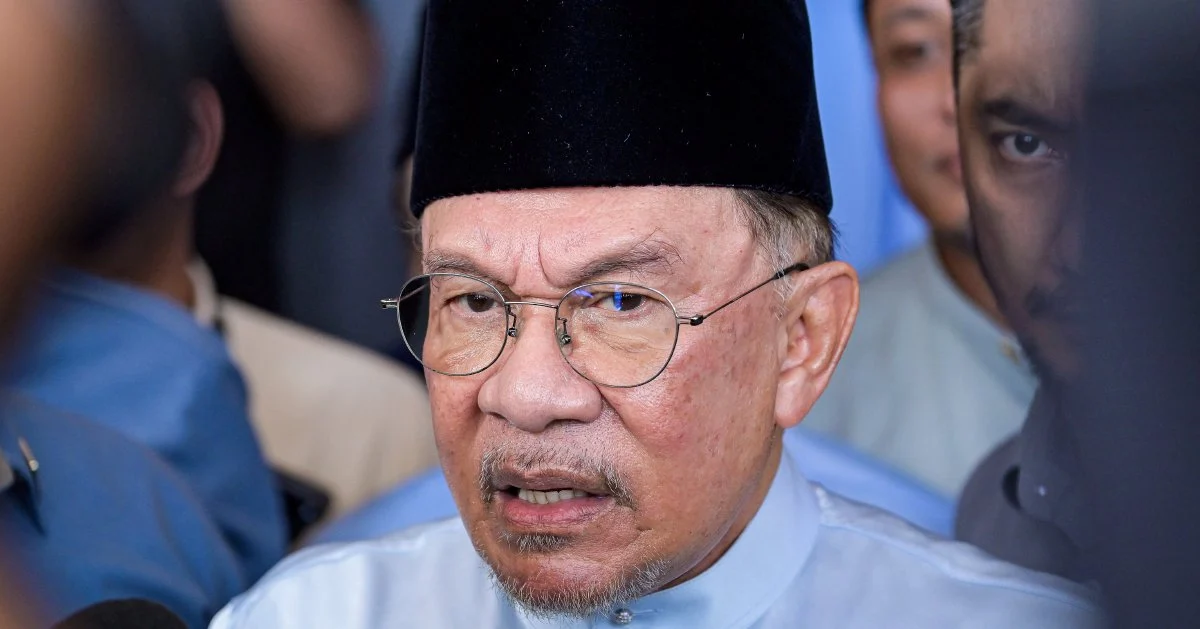
Prime Minister Datuk Seri Anwar Ibrahim moved swiftly to dismiss allegations that caretaker Johor Menteri Besar Datuk Onn Hafiz Ghazi had been deliberately excluded from a gathering at Felda settlements, during remarks made in Dengkil. The denial represents the latest flashpoint in simmering political tensions between federal and state-level leaders, particularly as Malaysia navigates a complex coalition landscape ahead of critical elections.
The allegations of exclusion, which circulated through media channels and social commentary, had suggested a deliberate attempt to marginalise the Johor leadership. Such claims, if substantiated, would have signalled a concerning fracture within the ruling coalition at a time when unified messaging is paramount. The incident underscores how quickly political narratives can escalate in Malaysia's highly charged partisan environment, where control of Felda—the country's massive land settlement scheme representing hundreds of thousands of voters—carries substantial electoral weight.
Felda settlements represent one of Malaysia's most strategically important voting blocs, with direct state and federal political implications. These agricultural communities wield disproportionate influence during general elections, making any perceived snub or exclusionary tactic a matter of genuine political consequence. The settlements span multiple states including Johor, and decisions about who accesses these communities carry symbolic weight beyond the immediate event.
Anwar's categorical rejection of the exclusion narrative appears designed to reset political relations and underscore that no systematic effort to freeze out state governments exists within the federal administration. The Prime Minister's intervention from Dengkil signals an awareness that such allegations, if left unchallenged, might erode confidence among coalition partners or suggest internal disagreements that could damage the broader political alliance ahead of electoral contests.
Onn Hafiz's position as caretaker Menteri Besar reflects Johor's recent political turbulence, with the state having undergone significant realignment. His standing within federal circles carries implications for how the state government navigates relations with Kuala Lumpur, particularly regarding resource allocation, development projects, and electoral coordination. Any perception of federal coldness toward the state's chief executive could complicate state-level governance and federal cooperation.
The timing of these allegations deserves scrutiny within Malaysia's electoral calendar. As the nation approaches various electoral contests—from state elections to general elections—political opponents and media outlets often amplify narratives around coalition tensions and leadership disputes. Such reporting can either reflect genuine fractures or serve as political messaging designed to weaken specific figures or administrations. Anwar's swift dismissal suggests the Prime Minister views the allegations as potentially destabilising and politically damaging if amplified further.
Felda's governance intersects both state and federal jurisdictions, creating complex overlapping responsibilities that occasionally generate friction. State leaders and federal authorities sometimes disagree on priorities, funding allocation, and development strategies affecting these communities. Allegations of exclusion might reflect genuine policy disagreements being amplified through political narratives, or conversely, they might represent unfounded claims designed to embarrass either the federal or state administration.
The broader context includes Malaysia's evolving political configuration, where coalition governance requires careful management of relationships between federal leadership and state governments. Prime ministers must maintain sufficient distance to assert federal authority while avoiding the appearance of punishing or marginalising state chief executives, particularly those from allied parties or coalitions. Anwar's statement attempts to walk this delicate balance, reasserting inclusivity while implicitly discouraging similar allegations.
For Malaysian political observers and participants, this incident illustrates how rapidly allegations of political exclusion can circulate and the speed with which senior leadership must respond. In an environment saturated with political competition and media scrutiny, claims of systematic exclusion resonate powerfully with voters and activists who perceive such actions as evidence of factional conflict or poor governance. Anwar's denial aims to preempt these narratives gaining further traction.
Moving forward, the incident highlights ongoing challenges in Malaysian coalition governance. As the country continues managing multi-party, multi-ethnic, and multi-level government structures, maintaining perceived fairness and inclusivity becomes increasingly important for political stability. The Prime Minister's intervention from Dengkil represents an attempt to reset expectations and reassure all coalition partners that federal decision-making prioritises unity over factional advantage, even as Malaysia's complex political economy generates numerous genuine points of tension requiring navigation.

