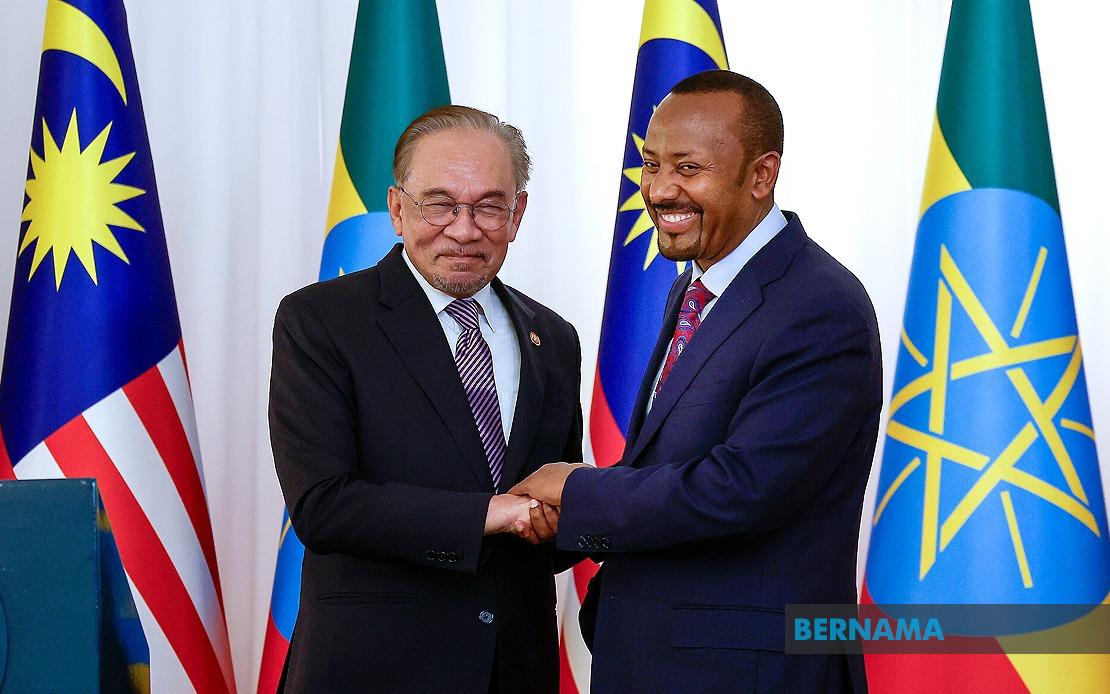
Prime Minister Datuk Seri Anwar Ibrahim has offered his congratulations to Ethiopian Prime Minister Abiy Ahmed Ali and the ruling Prosperity Party following their success in Ethiopia's latest general election, marking a significant moment in Malaysia's expanding diplomatic footprint across the African continent. The gesture, communicated through a social media statement, underscores the warming relationship between Kuala Lumpur and Addis Ababa at a time when Malaysia is deliberately repositioning itself as an active player in African affairs and South-South cooperation.
Anwar's acknowledgement of the electoral outcome arrives amid Ethiopia's complex political landscape, where the Prosperity Party's victory represents a continuation of Abiy's leadership following years of internal conflict and international scrutiny. For Malaysia, the congratulatory message carries deeper strategic weight than mere diplomatic courtesy, signalling government commitment to relationships forged during Anwar's trailbreaking visit to Ethiopia last year—the first by a sitting Malaysian prime minister to the East African nation.
The Malaysian leader drew specific attention to his previous engagement with Abiy, recalling the warm reception extended during that landmark visit and the substantive conversations that took place between the two leaders. This personal dimension proves critical to understanding Malaysia's Africa strategy, which prioritizes building leader-to-leader relationships as foundations for institutional cooperation and economic partnerships that can benefit both nations over the medium to long term.
In his statement, Anwar articulated a shared worldview with Abiy, noting that both leaders perceive global affairs through comparable lenses. This alignment of perspectives extends to their conviction that nations comprising the Global South possess untapped collaborative potential when engaging as genuine partners rather than subordinates to traditional power structures. Such positioning reflects Malaysia's broader diplomatic philosophy under Anwar's administration—one that seeks to elevate the voice and agency of developing nations in international forums and bilateral negotiations.
The significance of Ethiopia to Malaysian foreign policy cannot be overstated. As home to the African Union headquarters, Ethiopia functions as the continental hub for diplomatic activity, trade negotiations, and strategic coordination among African states. By cultivating strong ties with Addis Ababa and its leadership, Malaysia effectively positions itself to deepen engagement across the entire African region, accessing networks and partnerships that might otherwise remain closed to Southeast Asian actors. Ethiopia's election outcome therefore carries implications extending well beyond bilateral relations.
Anwar emphasized that Malaysia views Ethiopia as a critical counterpart in broader African engagement, reflecting a deliberate strategic choice to expand beyond traditional Southeast Asian and Middle Eastern spheres of influence. This represents a notable shift in Malaysian foreign policy direction, particularly given the administration's focus on advancing South-South cooperation and building coalitions among the developing world. Ethiopia's stability and Abiy's continued leadership provide a reliable anchor for these ambitions.
The Malaysian premier signalled that momentum established during his 2024 visit should form the basis for sustained cooperation moving forward. He referenced multiple initiatives set in motion during that engagement, implying concrete arrangements spanning trade, investment, cultural exchange, and multilateral collaboration. The election victory of Abiy and his Prosperity Party effectively removes uncertainty about continuity in these bilateral programmes and provides renewed opportunity to deepen existing commitments.
For observers tracking Malaysia's repositioning on the global stage, Anwar's response to Ethiopia's election outcome exemplifies the administration's commitment to playing a more active and visible role in African affairs. Rather than treating Africa as a peripheral region, Malaysian leadership increasingly views the continent as essential to Malaysia's medium-term foreign policy objectives and economic diversification. This reorientation demands sustained diplomatic engagement, investments in relationship-building, and alignment with credible partners like Abiy's government.
The congratulatory message also reflects Malaysia's awareness that Ethiopia's internal dynamics have significant repercussions for regional stability across the Horn of Africa and the broader continent. Abiy's victory consolidates his authority and his party's mandate to pursue development agendas and regional diplomacy. For Malaysia, a stable and governmentally coherent Ethiopia translates into a more reliable partner for fostering the South-South partnerships that Anwar has championed as central to his foreign policy vision.
Anwar's engagement with Abiy extends beyond transactional diplomacy; it embodies a strategic recalibration where Malaysia seeks to establish itself as a trusted voice within African development discourse and regional geopolitics. The congratulations serve to reinforce personal rapport and institutional relationships that, if properly cultivated, could yield dividends across investment, technology transfer, diplomatic coordination, and participation in continental initiatives. Ethiopia's election result thus becomes not merely an African electoral moment but a juncture affecting Malaysian strategic interests.
Moving forward, the consolidation of Abiy's Prosperity Party's electoral mandate is likely to create conditions favourable for implementing the bilateral agenda discussed between Anwar and the Ethiopian leader during their previous meetings. This could encompass expanded trade ties, closer cooperation within multilateral forums where both nations have interests, and potentially enhanced people-to-people exchanges. Malaysia's investment in Ethiopia through renewed diplomatic attention may yield broader influence across East Africa and the continent more generally.

