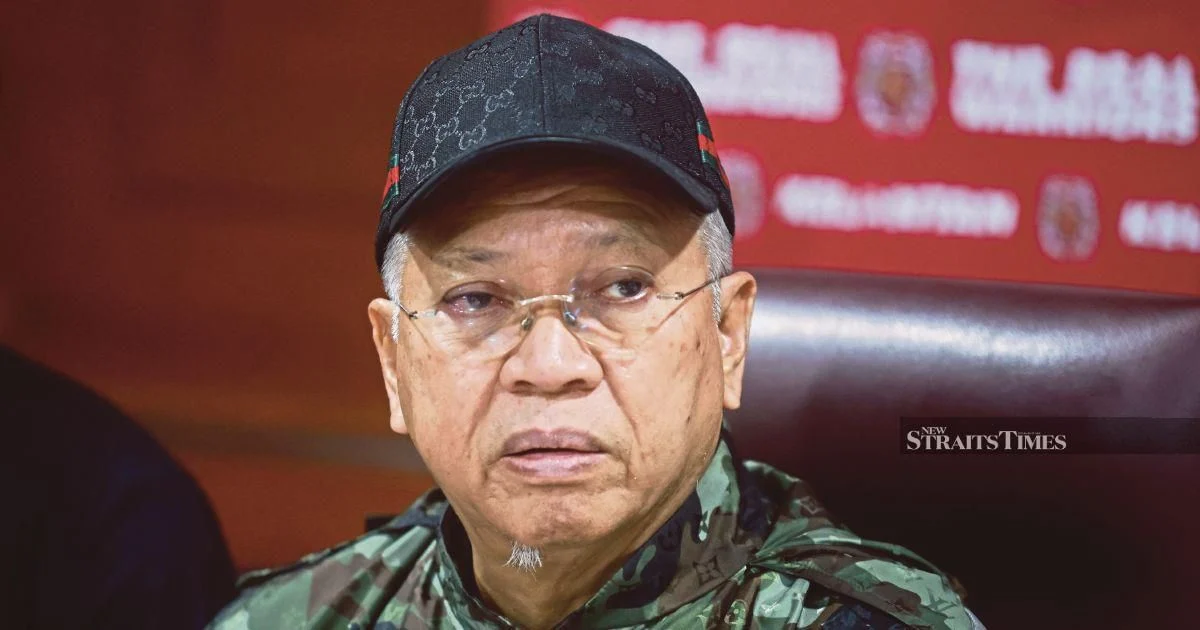
Tan Sri Annuar Musa has publicly acknowledged that his efforts to bridge the deepening divisions between PAS and warring factions within Bersatu have ultimately fallen short, raising fresh concerns about the stability of the Perikatan Nasional coalition at a critical moment in Malaysian politics. Speaking in Kota Baru, the senior political figure disclosed that he had undertaken multiple rounds of dialogue in a personal capacity to arrest the deterioration of internal relations that threatens the cohesion of the ruling alliance.
The admission represents a significant moment of candour from a senior coalition member. Annuar's acknowledgement that such reconciliation attempts proved unsuccessful signals that the rifts separating PAS and the competing camps within Bersatu run deeper than public statements from party leaders have previously suggested. The revelation implies that informal back-channel negotiations, historically a favoured mechanism for resolving intra-coalition disputes in Malaysian politics, have exhausted their usefulness in addressing the current fracture.
The Perikatan Nasional coalition, which came to power in 2021 following the collapse of the Pakatan Harapan government, has never operated as a seamlessly unified entity. However, tensions between its constituent parties have intensified noticeably over recent months. PAS, which controls several state governments and holds significant parliamentary seats, has increasingly pursued its own ideological and political agenda with limited apparent consultation with coalition partners. Meanwhile, Bersatu remains internally fractured between the faction loyal to former Prime Minister Muhyiddin Yassin and the camp aligned with current party leadership under Zahid Hamidi, creating a situation where the coalition effectively contains not two stable partners but three competing power blocs.
For Malaysian observers monitoring political stability, Annuar's disclosure carries particular weight given his reputation as a consensus-builder and his central position within the coalition's decision-making apparatus. If someone of his standing and influence has been unable to broker accommodation between these parties, this suggests that the divisions have calcified into positions of principle rather than mere tactical disagreement. The failure of quiet diplomacy to produce results typically precedes more public confrontation and potentially legislative instability.
The implications for governance are substantial. Coalition governments depend fundamentally on internal cohesion, both to maintain parliamentary majorities and to present a unified policy platform to the electorate and international partners. When internal factions begin pursuing contradictory objectives or public positioning, legislative business becomes unpredictable, policy implementation falters, and the government's ability to respond effectively to national challenges deteriorates. Malaysia has experienced this dynamic repeatedly over the past five years, and each iteration carries reputational costs.
The specific fault lines between PAS and Bersatu reflect broader strategic calculations. PAS has demonstrated increasing confidence in its position, particularly following strong performances in recent state elections and sensing that certain constituencies respond positively to its religious and cultural messaging. Bersatu, by contrast, finds itself caught between the institutional advantages of holding the premiership and the reality of being numerically the smallest coalition partner. The Muhyiddin faction within Bersatu has also maintained separate power networks and communication channels, effectively preventing unified party decision-making.
Annuar's attempt to mediate these tensions likely focused on identifying shared interests and clarifying red lines. In Malaysian coalition politics, such exercises typically involve proposing procedural reforms, redistributing ministerial portfolios, or establishing coordination mechanisms designed to give smaller partners greater voice in decision-making. That such proposals have failed to gain traction suggests that at least one major party or faction views the current arrangement as less preferable than alternative configurations.
The broader regional context amplifies the stakes of coalition instability in Malaysia. Southeast Asia has experienced considerable political flux in recent years, and external observers monitor Malaysia's governance stability as an indicator of institutional resilience. Repeated coalition crises damage Malaysia's international standing and create openings for opportunistic moves by neighbouring governments or rival coalitions seeking to capitalise on perceived weakness.
Looking forward, Annuar's candid acknowledgement may itself represent a strategic move. By publicly admitting that reconciliation efforts have failed, he may be signalling to other coalition members or to parliamentary fence-sitters that options for internal resolution have been exhausted, potentially paving the way for more formal mechanisms or structural changes to how the coalition operates. Alternatively, the statement could reflect frustration within certain coalition quarters with the obstinacy of rival factions.
For Malaysian citizens and businesses, the core concern involves predictability and consistency in government policy and legislative action. Coalition instability translates into delayed economic decisions, postponed infrastructure projects, and uncertainty about the trajectory of key policies affecting trade, investment, and social programmes. The coming weeks will reveal whether Annuar's failed mediation efforts prompt the coalition's senior leadership to adopt more decisive approaches to managing internal disputes or whether further deterioration lies ahead.

