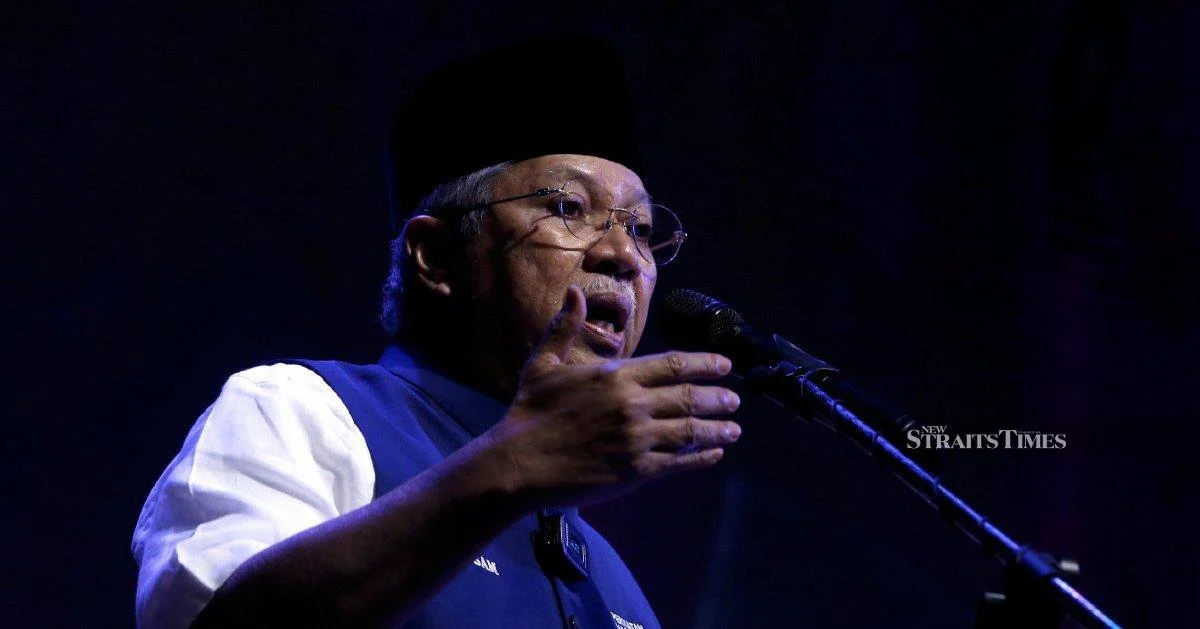
Bersatu has come under pressure to adopt a measured approach in response to escalating friction within the Perikatan Nasional alliance, as internal disagreements threaten to undermine the three-party coalition's political standing and legislative effectiveness. The call for restraint represents an acknowledgment of deepening divisions that have surfaced in recent weeks, with concerns mounting that public disputes could further weaken the bloc's negotiating position and public image.
The appeal for calm comes at a critical juncture for the coalition, which has faced mounting scrutiny over its inability to maintain unity on key policy matters. Within Malaysian political circles, observers have noted that sustained internal conflict could jeopardise the alliance's capacity to respond effectively to parliamentary business and government initiatives, particularly as the current administration navigates complex economic and social challenges.
Bersatu's position within Perikatan Nasional has been subject to considerable examination in recent months. The party, which commands significant influence within the broader opposition coalition framework, has grappled with balancing its own political interests against the broader objectives of maintaining coalitional cohesion. This tension reflects a common challenge in multi-party alliances, where individual parties must reconcile distinct ideological orientations and organisational priorities.
The dynamics within Perikatan Nasional carry implications extending beyond the coalition itself. Malaysia's political landscape has become increasingly fragmented, with multiple blocs competing for parliamentary influence. The stability and effectiveness of opposition coalitions therefore assume heightened importance in the context of broader democratic competition and governmental oversight. Should internal divisions persist and intensify, the coalition's capacity to serve as a meaningful check on governmental authority could be substantially diminished.
Regional observers have suggested that coalition management represents one of the most pressing challenges confronting Malaysian opposition movements. The difficulty of maintaining discipline and unity across parties with distinct organisational cultures and strategic orientations has historically proven considerable. The current appeal for restraint underscores recognition within Bersatu's leadership that unguarded public statements risk triggering escalatory cycles of recrimination that could prove damaging to all coalition members.
The timing of this intervention also reflects strategic considerations related to parliamentary calendars and upcoming legislative business. Coalitions typically seek to present unified positions during periods of significant parliamentary activity, as fractious public disagreements can be exploited by rival political forces to advance alternative narratives and policy proposals. By encouraging internal discipline now, Bersatu's leadership appears intent on preserving the coalition's capacity to mount coordinated responses to government initiatives.
Commentators have noted that the coalition's management challenges extend beyond rhetorical discipline to encompass substantive policy disagreements on resource allocation, government formation scenarios, and strategic direction. These underlying disputes cannot be entirely suppressed through appeals for public restraint, though such approaches can limit immediate damage to the coalition's coherence and public positioning. The effectiveness of Bersatu's current intervention will ultimately depend on the coalition's capacity to address root causes of friction through structured dialogue and negotiated compromise.
The broader implications for Malaysian politics warrant consideration. A coalition framework characterised by persistent internal tension ultimately serves neither opposition interests nor broader democratic objectives. Public confidence in opposition institutions depends partly on demonstrable organisational competence and internal stability. Continued friction, even if temporarily contained through calls for restraint, may gradually erode public perception of the coalition's viability as an alternative governmental force.
Looking forward, the sustainability of Perikatan Nasional hinges substantially on whether member parties can develop institutional mechanisms for managing disagreements without allowing them to spill into the public domain with regularity. This requires investment in internal consultation structures, clear protocols for resolving disputes, and shared commitment to pursuing negotiated settlements before resorting to public advocacy. Whether the current call for calm represents a meaningful inflection point or merely a temporary pause in ongoing tensions remains uncertain, though observers will monitor the coalition's behaviour closely in coming weeks.