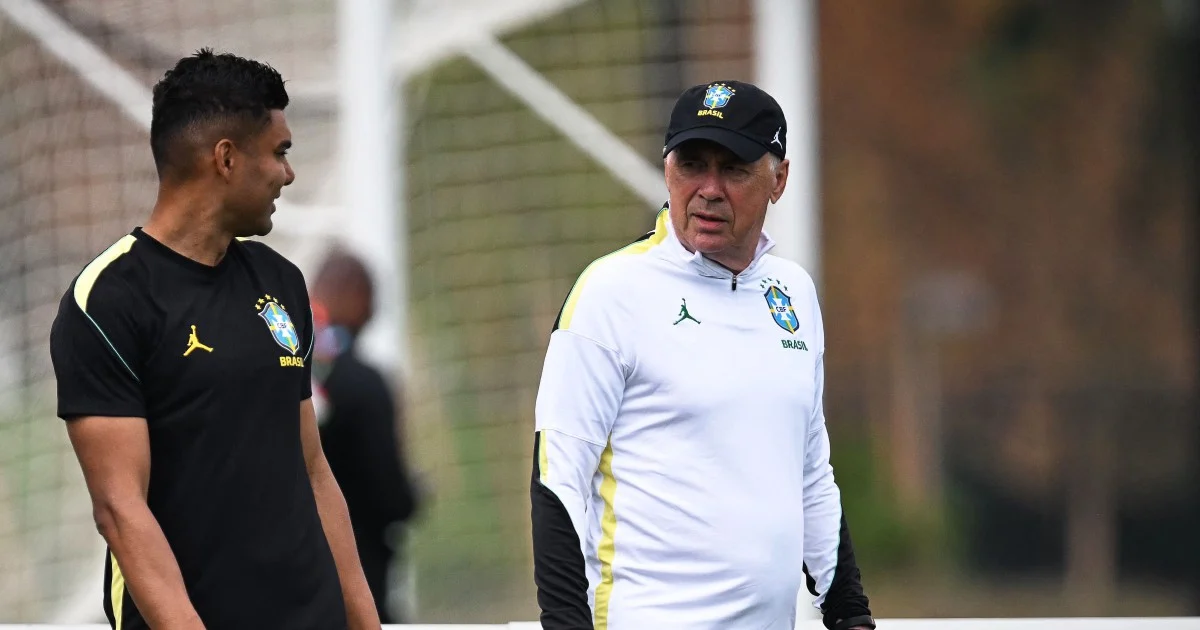
Brazil's World Cup campaign began with disappointment when they could only manage a 1-1 stalemate against Morocco in their opening Group C fixture, yet coach Carlo Ancelotti has resisted the urge to make drastic changes, instead framing the forthcoming clash with Haiti in Philadelphia as a critical opportunity to reset and execute the blueprint the five-time champions have been preparing to deploy throughout the tournament.
Ancelotti's measured approach reflects the experience of a manager who has navigated high-pressure situations across Europe's elite clubs, having learned that tournament football rarely follows a linear trajectory and that initial stumbles do not necessarily forecast an entire campaign's trajectory. Rather than resort to wholesale tactical overhauls or public recriminations, the Italian tactician has identified specific technical deficiencies that emerged against the Moroccan defence and views the encounter with Haiti as the ideal testing ground to refine Brazil's attacking patterns and defensive organisation.
The equilibrium Brazil achieved against Morocco—a result that satisfied neither side—exposed vulnerabilities that Ancelotti believes are addressable through tactical refinement rather than personnel changes. Morocco's compact defensive structure and disciplined pressing revealed gaps in Brazil's build-up play and created opportunities for counter-attacks that the South Americans were fortunate to weather. Rather than interpret these shortcomings as indicative of deeper structural problems, Ancelotti has positioned the Haiti match as a platform to increase attacking intensity while shoring up the defensive transitions that caused concern in the opening fixture.
For Brazil's fanbase accustomed to expecting swift dominance and emphatic scorelines, the stalemate with Morocco represented an unwelcome reminder that tournament football has evolved considerably since their last World Cup triumph in 2002. The expectations that accompany Brazil's participation in any major competition remain astronomical, and a draw in the opening match inevitably triggers questions about tactical coherence and squad readiness. Yet Ancelotti's refusal to succumb to external pressure signals a confident manager who trusts the preparation his team has undergone and recognises that the qualitative improvement required for the Haiti encounter may demand only fine-tuning rather than fundamental reconstruction.
Haiti's presence in the World Cup represents a remarkable achievement for Caribbean football, yet their comparative inexperience at this level presents Brazil with an invaluable opportunity to rebuild confidence and establish the commanding presence that major tournament campaigns demand. The disparity in World Cup experience and technical sophistication between Brazil and Haiti is substantial, and Ancelotti will undoubtedly expect his squad to dominate possession and create numerous scoring opportunities. The psychological value of a convincing victory against Haiti cannot be overstated—it would allow Brazil to progress with maximum points before confronting other Group C challengers and would restore the aura of invincibility that seems diminished following the Morocco result.
Ancelotti's strategic patience in the aftermath of disappointment reflects a philosophical approach that values process over panic. Managers operating under intense scrutiny at World Cups frequently feel obliged to demonstrate immediate tactical adjustments to satisfy media narratives and placate anxious supporters, yet the Italian's calm demeanour suggests he believes the fundamental approach remains sound and requires only marginal modifications. This confidence stems from the quality of Brazil's squad, which includes world-class players capable of executing complex tactical instructions and responding to in-game adjustments with tactical intelligence.
The Haiti match represents a crucial juncture in Brazil's tournament trajectory, serving as both a confidence builder and a practical examination of whether the flaws exposed against Morocco can be corrected efficiently. The Central American underdogs will likely adopt a defensive-minded approach, similar to Morocco's strategy, which means Brazil must develop greater creativity in breaking down well-organised opposition structures. If Ancelotti's adjustments prove effective against Haiti, Brazil can approach subsequent Group C matches with renewed confidence; conversely, another unconvincing performance would intensify scrutiny of the coach's tactical approach.
From a Southeast Asian perspective, Brazil's journey through this World Cup carries particular resonance given the global distribution of Brazilian footballing diaspora and the influence of Brazilian footballing philosophy across Asian football development programmes. Many regional coaches and administrators study Brazil's approach to tournament preparation and squad management, making the trajectory of Ancelotti's team instructive for the broader Asian football community. A Brazil team that maintains composure and methodically addresses tactical shortcomings would reinforce lessons about patience and process that resonate beyond the immediate context of their World Cup campaign.
Ancelotti's measured response to early adversity also contrasts sharply with more reactive managerial approaches that have sometimes backfired in major tournaments. His experience at elite European clubs has instilled a philosophical maturity about tournament football—the recognition that dramatic transformations between matches are rarely necessary and that incremental improvements, properly implemented, frequently prove more valuable than wholesale reinvention. The Haiti match will ultimately reveal whether Ancelotti's calm assessment accurately reflects the true state of his team's readiness or whether the Morocco result harbingers deeper concerns that require more substantial intervention.