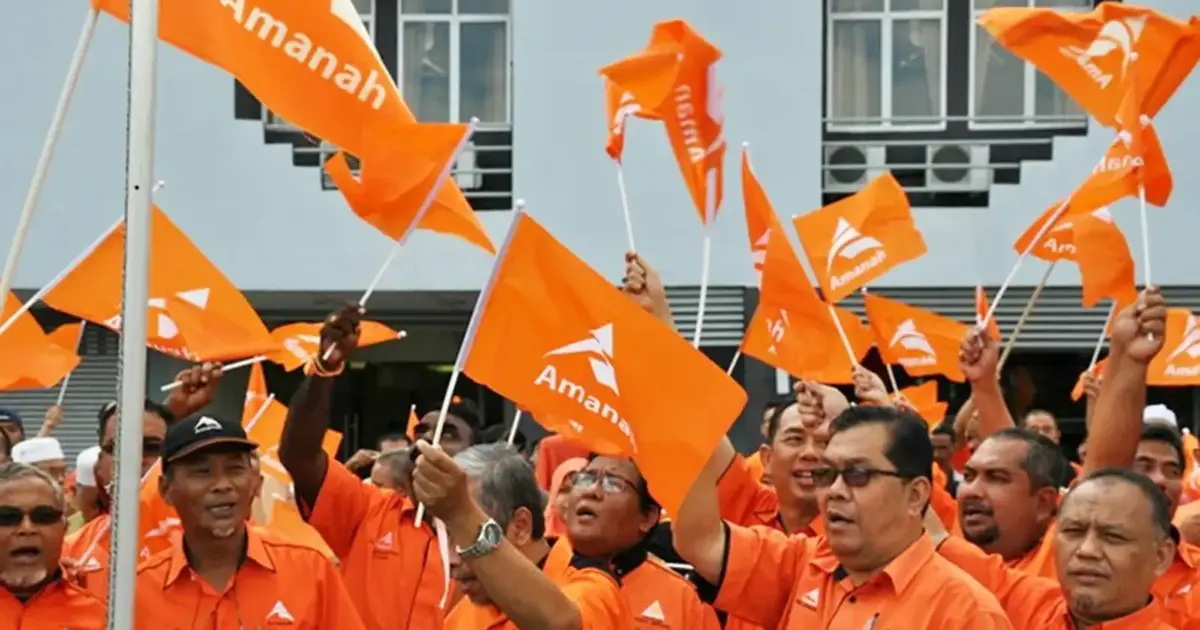
Amanah's top leadership has indicated the party will accept whatever decision Pakatan Harapan arrives at concerning candidate placement in the Puteri Wangsa constituency, demonstrating a commitment to maintaining coalition cohesion ahead of the forthcoming Johor state election. Faiz Fadzil, serving as secretary-general of the Islamic party, articulated this position while underlining that the coalition's central priority remains capturing the maximum possible number of seats to enable the formation of a state government after polling day.
The statement from Amanah represents a calculated move to forestall internal friction within Pakatan Harapan at a moment when the opposition coalition is seeking to project unity and strategic focus. By pre-emptively signalling flexibility on candidate allocation, Amanah has positioned itself as a cooperative coalition partner, potentially smoothing negotiations over seat distribution among the various parties competing under the Pakatan banner in Johor. This approach contrasts sharply with past instances when coalition disagreements over constituency allocation have threatened to undermine broader electoral objectives.
The Puteri Wangsa seat has emerged as a point of tactical interest within coalition planning, and Amanah's willingness to defer to the broader coalition decision-making process suggests internal party calculations favour maximising overall electoral performance over securing individual constituencies. For a party like Amanah, which has experienced fluctuating fortunes at both federal and state levels, demonstrating pragmatism and coalition loyalty can bolster its negotiating position for ministerial positions and strategic influence in any post-election government formation process.
In the context of Johor politics, this flexibility also reflects broader recognition that seat-sharing arrangements must be calibrated to maximise the opposition's prospects against the ruling Barisan Nasional coalition, which has traditionally dominated the state's electoral landscape. Pakatan Harapan's performance in Johor during the 2023 federal election established a foundation from which the coalition now seeks to build further inroads, and coordinated candidate placement across party lines remains crucial to translating voter support into government control.
Amanah's positioning also acknowledges the complex interplay between multiple Pakatan components in Johor, including the Democratic Action Party (DAP), Parti Keadilan Rakyat (PKR), and Amanah itself. Each party carries different geographical strongholds and demographic appeal, and optimising seat allocation requires careful analysis of winnable constituencies. By accepting PH's determination on Puteri Wangsa rather than advancing parochial party interests, Amanah has signalled maturity in coalition management and a focus on the broader strategic objective.
The secretary-general's remarks also serve an internal party function, directing Amanah members toward campaign preparation and ground-level engagement rather than becoming preoccupied with candidate selection disputes. Party members operating at grassroots level benefit from clear messaging that leadership remains unified around coalition objectives, which can translate into more effective campaign mobilisation and voter outreach during the crucial weeks leading to polling day.
From a Malaysian political perspective, Amanah's approach exemplifies the nuanced dynamics within Pakatan Harapan as it attempts to function as a viable alternative to long-established ruling coalitions. Unlike Barisan Nasional, where component parties operate within established hierarchies and precedents, Pakatan remains a relatively newer formation requiring explicit negotiation and consensus-building on electoral matters. Each party's willingness to compromise on tactical issues while maintaining focus on strategic objectives directly influences the coalition's capacity to present a compelling alternative to voters.
The forthcoming Johor election carries significance beyond the state itself, potentially reshaping perceptions of political momentum at a national level. A strong opposition performance would signal growing voter dissatisfaction with Barisan governance even in traditionally strong states, while a Barisan victory would reinforce perceptions of the ruling coalition's durability. Amanah's emphasis on maximising total seat wins reflects awareness that in such high-stakes contests, marginal gains translate into meaningful political outcomes and the difference between government and opposition status.
Looking ahead, Amanah's statement on Puteri Wangsa may establish a template for how coalition parties address remaining seat allocation negotiations. When a party of Amanah's stature demonstrates flexibility and coalition commitment, it creates pressure on other component parties to adopt similarly cooperative stances, potentially facilitating smoother overall seat distribution discussions. This domino effect can prove invaluable in preventing disputes that might otherwise consume time and generate negative publicity during the critical pre-election phase.
The party's strategic calculus also extends to post-election possibilities. Should Pakatan succeed in forming government in Johor, Amanah's demonstrated loyalty to coalition interests would position it favourably when distributing executive positions and development resources to constituent parties. Conversely, should the coalition fall short, having prioritised collective electoral performance over parochial interests provides valuable political capital for rebuilding efforts and framing future campaigns around unity and clear governance alternatives.

