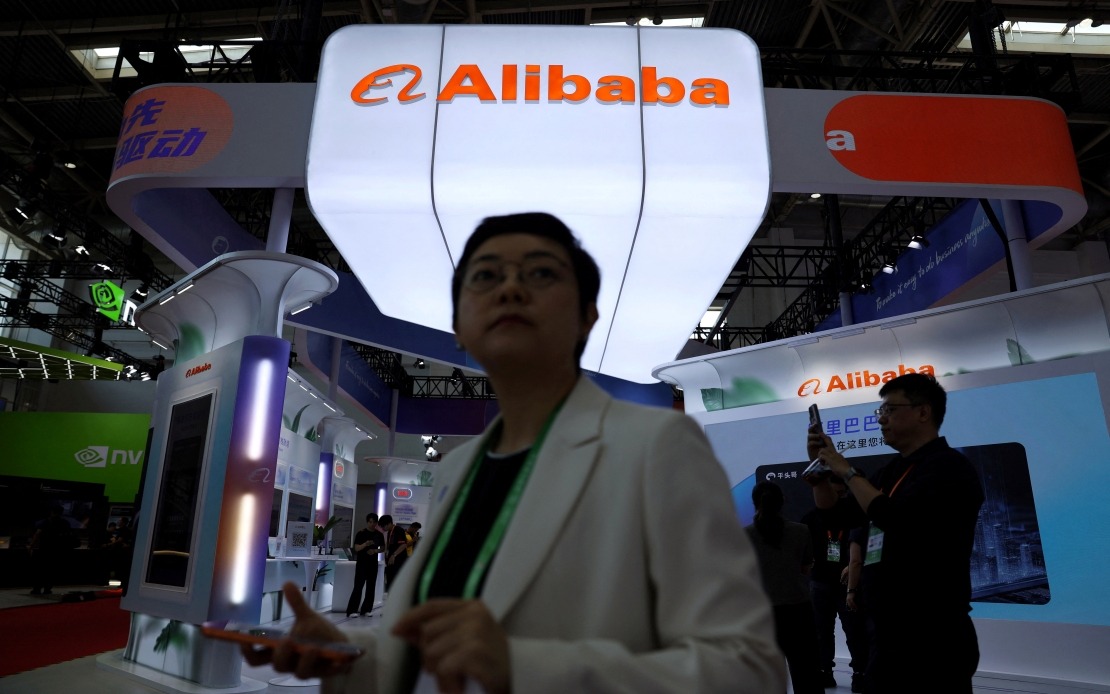
Chinese technology powerhouse Alibaba has initiated legal proceedings against the United States Department of Defense, challenging a controversial military designation that threatens the company's international operations and market access. The lawsuit, filed in June, represents an escalation in the ongoing regulatory dispute between American authorities and Chinese technology firms, signalling how geopolitical tensions are increasingly manifesting through formal legal channels rather than diplomatic negotiations.
The Pentagon added Alibaba to its roster of entities deemed connected to China's military-industrial complex earlier in June, alongside 187 other companies including technology rivals Tencent and automotive manufacturer BYD. This listing carries significant practical consequences, as it subjects the affected firms to potential sanctions, export controls, and restrictions on doing business with American entities and defence contractors. For Alibaba, which generates substantial revenue from international operations and partnerships with Western companies, the designation poses an existential threat to its global expansion strategy.
In its court filing, Alibaba's legal team mounted a vigorous defence, asserting that the Pentagon's determinations lack any credible factual foundation and violate established legal principles. The company emphasised that its governance structure operates independently, with board members holding no military affiliations whatsoever. This argument directly challenges the Pentagon's implicit assertion that Alibaba functions as an instrument of Chinese state military interests, a claim the company characterises as baseless and potentially motivated by protectionist rather than security concerns.
The technological giant articulated its business model as strictly commercial, positioning its platform and services as serving three distinct legitimate purposes: retail commerce, logistics infrastructure, and enterprise-level information technology solutions. These sectors represent the core pillars of Alibaba's revenue streams and strategic focus, encompassing everything from e-commerce marketplace operations to cloud computing services for businesses. The company's argument suggests that its products and services have no conceivable military application, making the designation fundamentally misaligned with reality.
Alibaba further substantiated its position by highlighting its internal contractual frameworks and compliance protocols, which explicitly prevent military applications and uses. The company maintains that its customer agreements and operational policies expressly prohibit any military deployment of its services, suggesting a deliberate corporate posture against defence-sector involvement. Additionally, Alibaba stressed that it holds no military certifications or licensing authorisations, another indicator that distinguishes it from genuine defence contractors or military-affiliated enterprises.
For Malaysian businesses and investors, this legal confrontation carries significant implications. Many Southeast Asian companies have developed deep commercial relationships with Chinese technology platforms, relying on Alibaba's infrastructure for supply chain management, cloud services, and digital marketing capabilities. If the Pentagon designation restricts Alibaba's operations or forces American divestment, it could disrupt regional digital commerce ecosystems that have become increasingly intertwined with Chinese technology infrastructure over the past decade.
The lawsuit also illustrates a broader pattern wherein American foreign policy objectives are being advanced through regulatory mechanisms rather than traditional diplomatic channels. By designating commercial technology firms as military entities, Washington effectively weaponises trade and financial access as geopolitical instruments. This approach sidesteps negotiation and generates legal ambiguity, as companies struggle to defend themselves against allegations that blend security concerns with protectionist impulses.
Alibaba's challenge reflects growing frustration among Chinese technology firms regarding what they characterise as arbitrary and discriminatory American regulatory practices. The company's legal strategy appears designed not merely to overturn its own designation but to establish legal precedent questioning the Pentagon's authority to make such designations without rigorous substantiation. A successful outcome could strengthen the position of other embattled Chinese companies facing similar listings.
The Pentagon's designation programme itself remains controversial among international observers who question whether commercial technology platforms genuinely pose military threats or whether the listings primarily reflect strategic competition and technology protectionism. Alibaba's insistence that its business operations are purely civilian raises legitimate questions about the evidentiary standards underlying the Pentagon's determinations and whether national security concerns are being appropriately balanced against commercial and legal considerations.
The case will likely proceed through American courts over an extended timeframe, creating prolonged uncertainty for Alibaba's global operations. Meanwhile, Chinese government officials have criticised the designations as discriminatory, viewing them as manifestations of American efforts to suppress Chinese technology leadership and constrain Chinese companies' international competitiveness. This judicial confrontation thus operates within a much larger context of US-China technological competition and strategic rivalry.
For regional stakeholders in Malaysia and Southeast Asia, the Alibaba litigation underscores the growing intersection between geopolitical rivalry and commercial operations. Companies engaging with Chinese technology platforms must now factor in evolving American regulatory landscapes and political dynamics. The outcome of this lawsuit may establish important precedents affecting how technology companies navigate increasingly bifurcated global markets where American and Chinese spheres of influence impose competing regulatory frameworks and strategic imperatives.

