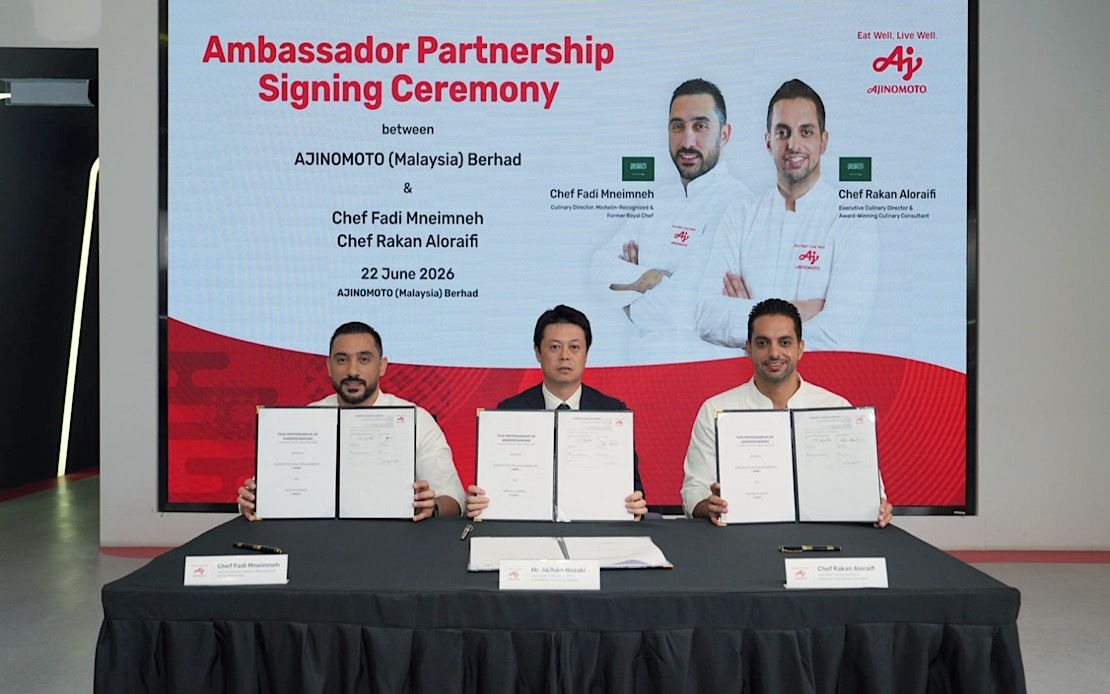
Ajinomoto (Malaysia) Berhad is accelerating its penetration of the Middle Eastern market through a strategic alliance with two of Saudi Arabia's most celebrated culinary personalities, positioning the Malaysian food manufacturer to capitalise on the region's surging appetite for premium halal solutions. The collaboration with Chef Fadi Mneimneh, a Michelin-starred culinary director and former royal chef, and Chef Rakan Aloraifi, an award-winning executive chef and consultant, represents a calculated pivot toward leveraging local influence and credibility to embed the company's products deeper into the hospitality and foodservice ecosystem across the Arabian Peninsula.
The visit by both chefs to Ajinomoto's manufacturing facility in Bandar Enstek, Negeri Sembilan offered an intimate showcase of the company's quality assurance protocols, product range, and the religious compliance measures that underpin its halal certification. By inviting these influential figures into its production heartland, the company sought to build a bridge between its Japanese food science heritage and Middle Eastern culinary traditions, a critical step in establishing trust among regional distributors, restaurant operators, and procurement decision-makers who prioritise both authenticity and certification integrity. The factory tour served a dual purpose: educating the chefs about the technical rigour behind Ajinomoto's manufacturing while simultaneously equipping them with credible first-hand knowledge they could communicate to their extensive professional networks.
The centrepiece of the engagement involved live culinary demonstrations where both chefs prepared signature Middle Eastern dishes using selected Ajinomoto products. These hands-on sessions carried particular strategic value, as they illustrated a core marketing proposition: that umami enhancement—the fifth taste dimension—could elevate traditional recipes without diluting their cultural authenticity. For Middle Eastern chefs and food professionals accustomed to time-honoured preparation methods, this demonstration format proved more persuasive than conventional marketing because it showed, rather than merely asserted, how Japanese food science could complement rather than displace regional culinary practices. The narrative linking Japanese food innovation with Middle Eastern heritage creates a compelling positioning that appeals to both tradition-conscious consumers and forward-thinking hospitality operators seeking competitive advantage.
Ajinomoto's choice of key opinion leaders reflects a nuanced understanding of how culinary influence operates across the Gulf region. Both chefs command respect not merely through their technical credentials but through their visibility within elite hospitality circles where purchasing decisions for major hotels, restaurants, and catering operations are made. Chef Fadi's background as a royal chef extends his influence into the highest echelons of Saudi society, while Chef Rakan's consultancy work positions him as a trusted advisor to institutional clients. By embedding Ajinomoto's brand narrative within their professional recommendations and culinary practice, the company gains access to networks that traditional advertising cannot easily penetrate. This strategy recognises that business-to-business purchasing decisions in the HORECA sector are often influenced by peer endorsement and professional reputation rather than marketing collateral alone.
The broader commercial context for this partnership reflects fundamental shifts in Middle Eastern food consumption patterns. The region's rapid urbanisation, rising disposable incomes, and increasing tourism have generated sustained demand for culinary innovation and premium ingredients, particularly among affluent consumers and hospitality establishments seeking differentiation. Simultaneously, the halal certification requirement remains non-negotiable across Muslim-majority markets, creating a market access barrier that Ajinomoto has systematically addressed through its production standards and documentation. The company's halal-certified portfolio thus occupies a privileged position: it meets regulatory imperatives while offering functional benefits through umami enhancement, a combination few international food manufacturers can authentically deliver. This convergence of regulatory compliance and culinary value proposition is precisely what the Saudi chef partnership aims to exploit.
The involvement of Ajinomoto's distributor representative in Brunei during the Bandar Enstek visit underscores the regional dimension of the strategy. By facilitating networking among multiple Southeast Asian and Middle Eastern partners, Ajinomoto is constructing a collaborative ecosystem where information, best practices, and business leads can circulate beyond the immediate Saudi partnership. This approach recognises that the halal food supply chain functions as an interconnected regional network rather than isolated bilateral relationships. Brunei's strategic positioning as a Muslim-majority state with significant HORECA sectors makes it a natural participant in such forums, and the visibility it gains through this partnership may translate into expanded distribution opportunities closer to Malaysian shores.
Looking ahead, the partnership is set to culminate in substantive industry engagement at the HORECA event tentatively scheduled for October 2026 in Riyadh and Jeddah. These simultaneous demonstrations across Saudi Arabia's two major commercial centres will significantly amplify reach among hotel, restaurant, and café professionals, procurement decision-makers, and other stakeholders. The multi-city approach reflects recognition that the Saudi hospitality sector is geographically dispersed, with distinct business ecosystems in Riyadh and Jeddah requiring separate engagement. By hosting live culinary demonstrations at HORECA—an industry event that attracts serious purchasers rather than casual attendees—Ajinomoto transforms celebrity chef partnership into tangible business development activity where conversations can translate directly into orders and supply agreements.
The timing of this expansion aligns with Malaysia's broader positioning as a global hub for halal product development and certification. Ajinomoto's role in this ecosystem extends beyond commercial interest to national strategic value: each international expansion of a Malaysian halal brand strengthens Malaysia's reputation for product integrity and manufacturing excellence. The company's willingness to invest in deep engagement with Middle Eastern culinary opinion leaders signals confidence in the long-term growth trajectory of regional markets and commitment to sustainable market presence rather than transactional export arrangements. This patient capital approach contrasts with competitors pursuing shorter-term gains through sporadic marketing campaigns.
From an analytical standpoint, the partnership exemplifies how food manufacturers operating in regulated, culturally sensitive markets increasingly rely on local influencer engagement and experiential marketing rather than traditional advertising. The approach acknowledges that halal certification, while necessary, is insufficient as a standalone selling proposition; it must be complemented by demonstration of culinary credibility and quality differentiation. By positioning umami expertise as the technical advantage underlying premium halal products, Ajinomoto articulates a value proposition that resonates with sophisticated culinary professionals seeking both integrity and innovation. The strategy also hedges against potential commoditisation of halal products by emphasising the company's distinctive Japanese food science heritage as a differentiating factor within the crowded halal ingredient market.

