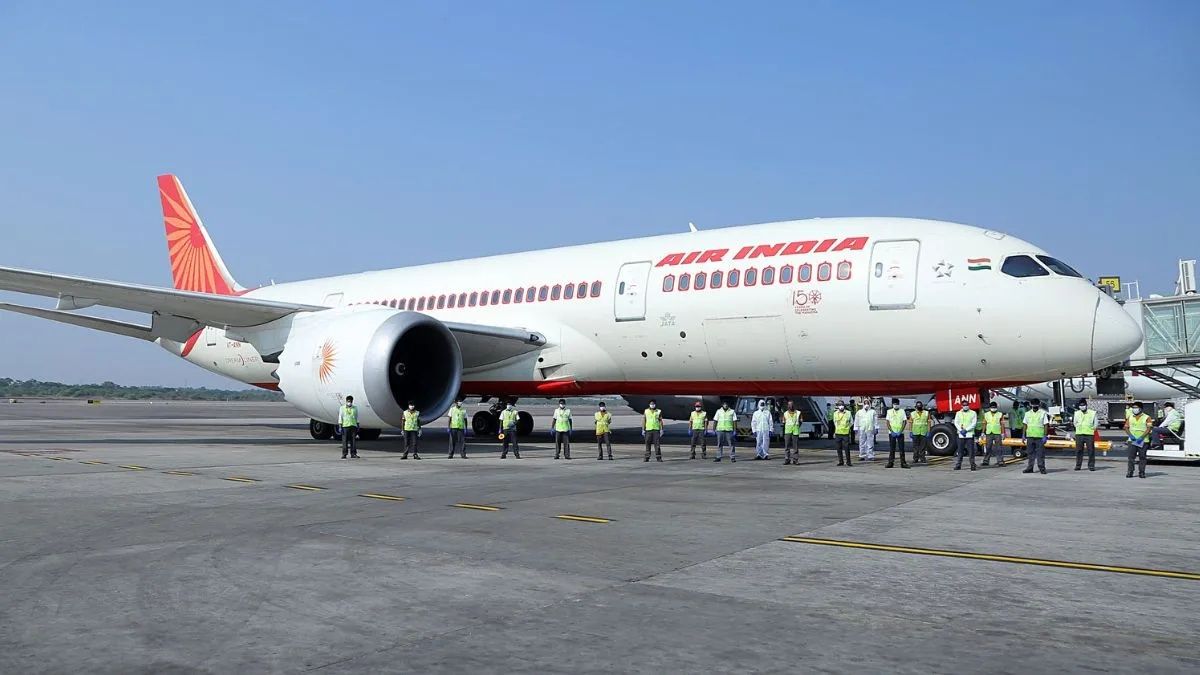
An Air India Airbus A321 flying the Delhi-Amritsar route inadvertently crossed into Pakistani airspace on Monday evening after suffering a critical navigation system failure, according to aviation authorities who confirmed the incident on Wednesday. The aircraft, operating as Flight AI-463, encountered technical difficulties shortly after departing Delhi's Indira Gandhi International Airport at 9:18pm on June 22, causing its flight path to veer westward across the International Border. Pakistani air traffic control detected the deviation and promptly coordinated with the Indian flight crew to alert them to the breach, allowing pilots to immediately correct their heading and guide the aircraft back into Indian territory without incident.
The navigation system malfunction that triggered the airspace incursion represents a significant operational concern for Indian civil aviation authorities. Such technical failures, while rare on modern aircraft equipped with redundant navigation systems, underscore the critical importance of maintaining robust safety protocols and regular maintenance schedules. The Airbus A321, a popular narrow-body aircraft operated by numerous Asian carriers, typically features multiple layers of navigational guidance including Inertial Reference Systems, GPS receivers, and ground-based navigation aids. The fact that the aircraft drifted westward suggests a potential failure in the primary or backup navigation systems that guide pilots along their assigned flight corridor.
The immediate response from Pakistani air traffic controllers demonstrated the operational professionalism and coordination that exists between neighbouring countries' aviation authorities despite geopolitical tensions. Rather than treating the incursion as a security breach, Pakistani ATC followed established international protocols for handling such incidents, communicating directly with the flight crew to facilitate a safe and orderly correction. This type of inter-country coordination has become standard practice in South Asian aviation, where commercial flight paths occasionally bring aircraft close to international boundaries. The swift communication likely prevented the situation from escalating into a more serious diplomatic or security matter.
However, the aircraft's troubles did not conclude with its return to Indian airspace. As the Airbus approached Sri Guru Ram Dass Jee International Airport in Amritsar around 10:30pm, the regional airspace was congested with heavy traffic, leaving no available landing slots for the incoming flight. Air traffic controllers, operating under strict capacity management protocols, instructed the crew to divert the aircraft back to Delhi rather than risk prolonged holding patterns that could further compromise safety and fuel reserves. This decision, while extending the passengers' ordeal by several additional hours, reflected prudent airspace management practices designed to prevent congestion-related incidents.
The return flight to Delhi allowed ground crews to conduct a comprehensive technical inspection of the aircraft's navigation systems and associated avionics. This maintenance interval proved essential for identifying and documenting the root cause of the system failure. Following the completion of necessary checks and receipt of operational clearances from maintenance engineers, the aircraft departed Delhi once more for Amritsar, finally touching down at 2:20am on Tuesday morning. The total delay of nearly four hours beyond the scheduled arrival time imposed considerable inconvenience on passengers, who experienced the frustration of an extended flight operation spanning multiple unplanned segments.
Both Air India and India's Directorate General of Civil Aviation have maintained silence regarding the specific technical nature of the navigation system failure, a measured approach that typically allows for preliminary investigations to progress before releasing detailed findings to the public. Such discretion prevents speculation about safety implications while investigators examine the aircraft's maintenance logs, flight data recorders, and crew communications. The DGCA has initiated a standard investigative protocol to determine the exact circumstances that precipitated the route deviation, with particular focus on whether the failure stemmed from hardware malfunctions, software glitches, or human factors related to system configuration or usage.
This incident carries particular significance given the complex airspace dynamics in South Asia and the heightened sensitivities surrounding India-Pakistan aviation matters. The region has witnessed previous instances where civil aviation incidents became entangled with diplomatic concerns, making the professional handling of this event noteworthy. The fact that both air forces and aviation authorities responded according to established international procedures suggests a mature approach to managing routine technical incidents that arise in shared or proximate airspace. However, the incident also highlights the necessity for continuous improvement in aircraft navigation system reliability and crew training protocols.
The broader context of this occurrence includes similar incidents involving Pakistani aircraft. Just one month prior, a Pakistan International Airlines flight had briefly entered Indian airspace due to adverse weather conditions before being guided back to its designated route by Indian air traffic controllers. These recurring incidents underscore the challenges inherent in managing civil aviation in a region where weather patterns are volatile, airspace is congested, and international boundaries create navigation constraints. The geographic proximity of major Indian and Pakistani cities, combined with seasonal weather patterns affecting the northern regions, creates an environment where technical failures or weather diversions can result in airspace incursions.
The investigation outcomes will likely inform regulatory discussions within India's aviation sector regarding navigation system redundancy, pilot training protocols for handling navigation system failures, and coordination procedures with neighbouring countries' air traffic control facilities. Investigators will examine whether the aircraft's systems operated within acceptable parameters before the failure, whether proper maintenance had been conducted according to manufacturer specifications, and whether pilot response protocols were followed correctly. The findings could lead to directives affecting how Air India and other carriers maintain and monitor their navigation systems, particularly on regional routes where margins for error are reduced.
From a passenger safety perspective, the incident demonstrates the effectiveness of modern aviation's multiple safety layers. Despite the navigation system failure and the subsequent operational challenges, the aircraft never faced genuine danger, and the crew successfully managed a complex situation involving technical malfunction, airspace coordination, and traffic congestion. The redundancy built into aviation systems, combined with professional crew training and responsive air traffic control, prevented what could have been a more serious incident. Nevertheless, passengers and aviation observers will closely monitor how Indian aviation authorities address the underlying technical issues and whether systemic improvements emerge from this investigation.

