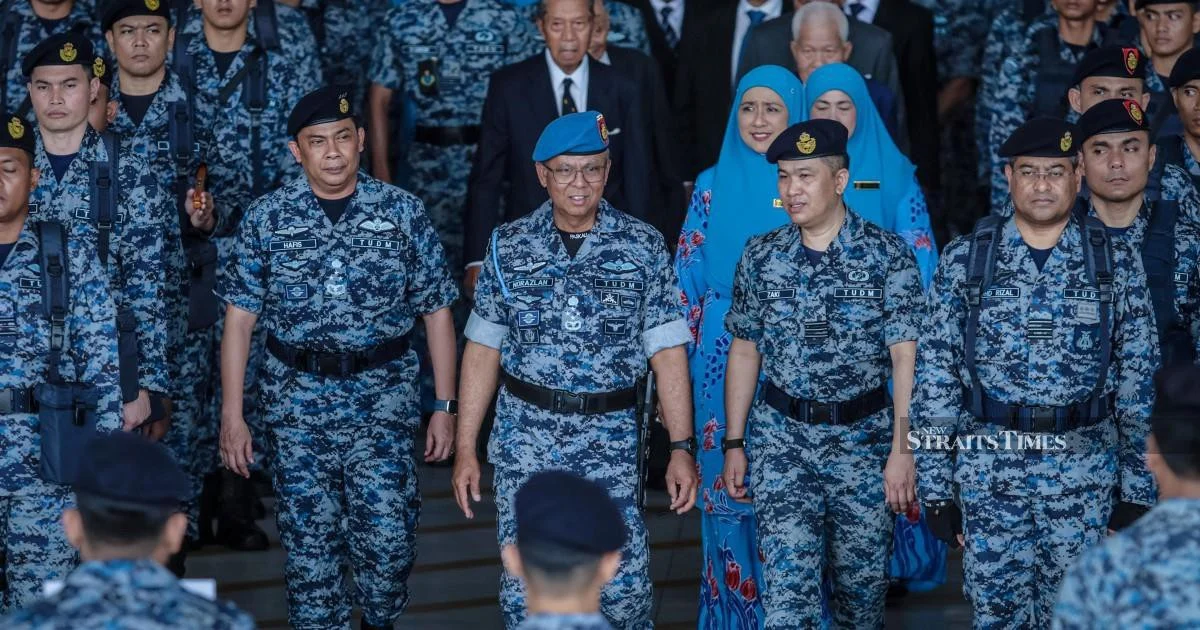
The Royal Malaysian Air Force has underscored the growing necessity of maintaining robust aerial capabilities to defend Malaysia's vital sea corridors, according to General Tan Sri Muhamad Norazlan Aris during remarks made in Subang. The RMAF commander's statements reflect a broader regional shift in security thinking, where air power has emerged as the cornerstone of maritime defence strategy rather than traditional naval assets alone.
Malaysia's geographic position astride critical shipping lanes connecting the Indian Ocean to the Pacific makes the country a natural custodian of some of the world's busiest maritime routes. The Strait of Malacca, in particular, serves as a chokepoint through which an estimated quarter of global maritime trade passes annually. This economic significance has amplified concerns about the security implications of evolving geopolitical dynamics in Southeast Asia, where several regional and extra-regional powers are asserting their strategic interests with increasing assertiveness.
The RMAF commander's emphasis on air capabilities reflects a tactical reality that extends beyond Malaysia's borders. Aerial surveillance and interception platforms can monitor vast ocean expanses far more efficiently than traditional surface vessels, making them indispensable for detecting and responding to maritime threats. From anti-ship missile systems to advanced fighter aircraft equipped with extended-range weapons, modern air forces have fundamentally altered how nations protect their maritime interests, a strategic calculus that Malaysia cannot afford to ignore.
Regional geopolitical complications have intensified the urgency of these security discussions. The South China Sea disputes involving multiple claimants, recurring tensions over disputed maritime zones, and the increasing militarisation of regional waters have elevated security concerns across Southeast Asia. Malaysia, with its own maritime claims and coastline stretching across both the South China Sea and the Strait of Malacca, occupies a particularly exposed position in this evolving strategic landscape. The nation's ability to project credible air power directly impacts its capacity to enforce maritime sovereignty and maintain the security of its economic lifelines.
The RMAF commander's remarks signal a recognition that Malaysia must invest strategically in modernising its aerial platforms and sensor networks. Contemporary air defence systems incorporate sophisticated radar capabilities, real-time data integration, and networked command structures that enable rapid response to emerging maritime threats. Without such capabilities, Malaysia risks becoming dependent on external powers to secure its own waters, a scenario that would compromise national sovereignty and strategic autonomy.
For Malaysian policymakers, the commander's assessment carries significant budgetary implications. Modernising air force capabilities requires sustained investment in aircraft procurement, pilot training, maintenance infrastructure, and technological upgrades. These expenditures compete with other pressing national priorities, yet the strategic stakes of inadequate maritime air defence are potentially enormous. Economic disruption resulting from maritime insecurity could undermine Malaysia's position as a critical node in global supply chains and damage investor confidence in the nation's ability to guarantee safe passage through its territorial waters.
The broader context extends beyond Malaysia's immediate national interests. The stability of Southeast Asian maritime routes affects global commerce and energy security. Nations throughout the region face similar pressures to strengthen their defensive capabilities, potentially triggering an arms acquisition cycle that reshapes the regional balance. Malaysia's approach to building its air power, therefore, carries implications for how the entire region navigates these security challenges and whether solutions favour cooperative mechanisms or unilateral military buildups.
The RMAF commander's intervention in public discourse on maritime security also reflects growing awareness among Malaysian military leadership of the need to communicate strategic thinking to civilian populations. Public understanding of maritime security challenges builds political support for necessary defence investments and demonstrates that military modernisation serves defensive rather than aggressive purposes. By framing air power as essential to protecting trade routes that benefit ordinary Malaysians, military leaders are contextualising defence spending within broader economic narratives that resonate with citizens concerned about employment and prosperity.
Regional cooperation offers a potential counterbalance to unilateral military escalation. The Association of Southeast Asian Nations has long promoted confidence-building measures and dialogue mechanisms designed to reduce maritime tensions. Coordinated surveillance systems, information-sharing protocols, and joint training exercises represent alternatives to arms races that could destabilise the region further. Malaysia's emphasis on air power need not preclude engagement with such cooperative frameworks, and indeed, credible defensive capabilities may strengthen rather than undermine Malaysia's capacity to engage constructively with regional partners from a position of security confidence.
Looking forward, the RMAF commander's statement signals that maritime security will remain a central strategic concern for Malaysia. Whether through modernised aircraft acquisitions, enhanced sensor networks, or improved integration with civilian maritime authorities, Malaysia faces sustained pressure to upgrade its air defence posture. The scale and pace of such modernisation will depend on budgetary choices, procurement timelines, and the evolution of regional circumstances. Nevertheless, the strategic imperative articulated by military leadership appears unlikely to diminish in the foreseeable future.