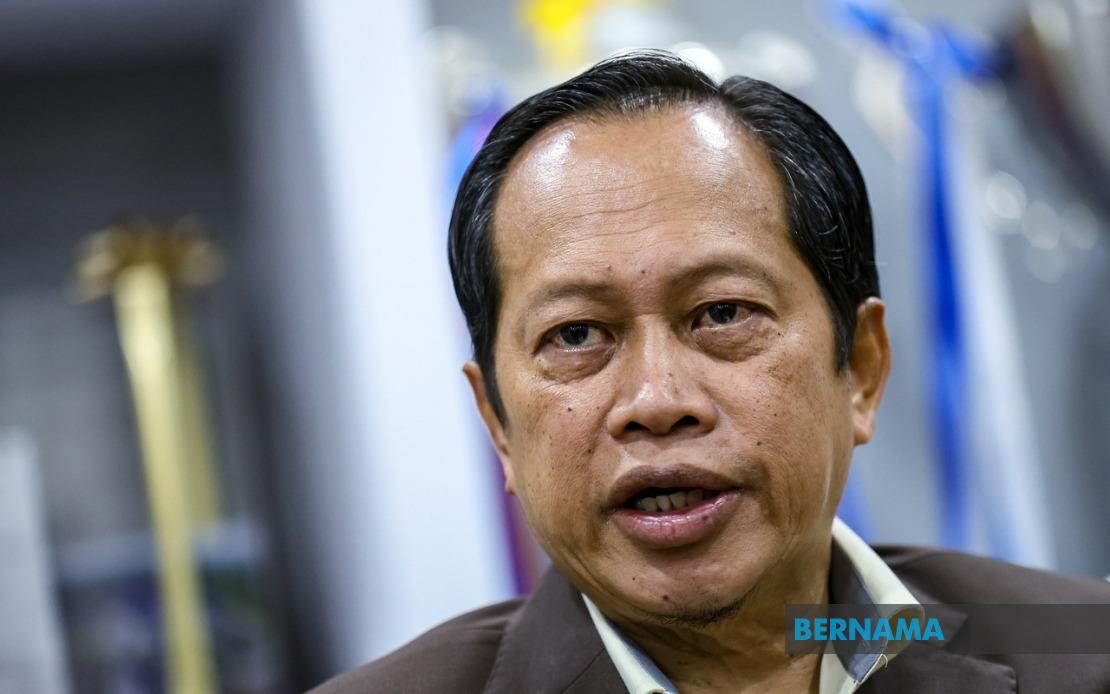
Johor's Barisan Nasional machinery has received clarity on its candidacy plans ahead of the state election, with senior party figure Datuk Seri Dr Ahmad Maslan formally announcing he will not be seeking a state assembly seat despite earlier rumours linking him to multiple constituencies. The Pontian Member of Parliament made the declaration during a visit to Johor Public Works Department headquarters in Iskandar Puteri on June 15, ending months of speculation about whether the Deputy Works Minister would shift his political focus from federal to state politics.
Ahmad's decision to forgo contesting in either the Benut or Pulai Sebatang state seats—both located within his parliamentary constituency of Pontian—represents a deliberate move to open opportunities for fresh political talent within the coalition. By stepping back from the state-level race, the senior UMNO figure is effectively reshaping the party's candidate roster at a critical moment when coalition dynamics are shifting across Malaysia's political landscape. His explicit statement that he has already communicated this position to party leadership suggests the decision was coordinated rather than spontaneous, indicating broader strategic thinking within BN's upper echelons.
The timing of Ahmad's announcement carries particular weight given that the Election Commission has already established a clear electoral calendar for Johor. The 16th state election will proceed to polling day on July 11, with nomination papers due on June 27 and early voting scheduled for July 7. This compressed timeline means that candidates must be formally announced and vetted well before the nomination deadline, leaving little room for last-minute changes or reconsiderations. Ahmad's early confirmation therefore allows the party machinery to move swiftly toward finalising its slate of nominees without the distraction of ongoing speculation about his intentions.
As Johor's BN deputy chairman, Ahmad occupies a pivotal position within the state organisation structure, making his electoral decisions particularly significant for coalition planning. His choice not to contest despite holding such a senior party position underscores that Malaysian politics increasingly separates administrative responsibility from direct electoral candidacy. This model allows experienced officials to concentrate on party management and coordination while developing next-generation leaders who can build their own constituent bases. In Ahmad's case, maintaining his federal portfolio as Deputy Works Minister while backing away from state politics suggests a clear prioritisation of his national role over state-level expansion.
The politician's commitment to remain actively engaged in BN's campaign efforts, despite not standing as a candidate himself, indicates he views his contribution to the coalition's electoral success in broader terms than simply winning his own seat. Senior figures who choose to sit out elections often pivot toward roles in campaign strategy, voter mobilisation coordination, and party messaging—functions that require seniority and political credibility but not direct electoral accountability. For BN in Johor, Ahmad's continued support from behind the scenes may prove equally valuable as his candidacy would have been, particularly given his years of experience navigating the state's political terrain.
The decision also reflects tactical considerations within UMNO and BN regarding the composition of their Johor assembly. By not contesting, Ahmad removes a potential point of internal competition for resources and campaign attention, allowing the coalition to concentrate its efforts on a more focused set of winnable seats. In competitive state elections, such rationalisation of candidacies can prove decisive, as it prevents the party from spreading limited campaign machinery and funding across too many contests. The Pontian area, though part of Ahmad's parliamentary stronghold, may not have been the most strategically valuable ground for BN to contest at the state level.
For voters in Johor, Ahmad's announcement clarifies the field of candidates competing for their votes in the coming weeks. The removal of speculation about whether the Deputy Works Minister would throw his hat into the ring allows local residents to focus on the actual candidates fielded by competing parties. This transparency in candidacy announcements strengthens democratic processes by enabling constituents to properly assess their options without last-minute surprises or confusion about who is actually standing. In both Benut and Pulai Sebatang, BN will now field nominees who have presumably not yet been publicly named, giving the coalition flexibility in its final candidate selection.
Ahmad's political profile as Deputy Works Minister also positions him as potentially valuable to BN's campaign messaging on infrastructure and development issues. Many Malaysian voters, particularly in Johor, prioritise connectivity, water supply, transportation networks, and public works as key election issues. With Ahmad in a senior federal role overseeing these portfolios, he becomes a valuable surrogate for BN's broader developmental agenda even without contesting a state seat. His continued prominence allows the coalition to leverage his ministerial position for campaign credibility without the complications that might arise if he were simultaneously campaigning for a single state seat.
The broader context of Malaysian state elections shows that senior federal figures increasingly adopt selective approaches to electoral participation. As coalition politics becomes more sophisticated, experienced politicians calculate precisely where their involvement generates maximum electoral return. Ahmad's decision to support BN's Johor campaign from an administrative role rather than as a candidate himself reflects this evolving approach. His position as Pontian MP remains secure at the federal level, providing him with a stable political base that does not require bolstering through state assembly membership.
Looking ahead to July 11, Ahmad's clarity on his own position will allow BN's machinery to concentrate fully on executing its state campaign strategy. The next three weeks will see intensive nomination processes, candidate vetting, and campaign launches across Johor. With senior figures like Ahmad focused on coordination rather than personal candidacy, the coalition can present a unified, professionally managed campaign that emphasises team unity over individual ambition. This approach, if executed effectively, could prove crucial in determining whether BN can maintain or expand its presence in Malaysia's second-largest state.