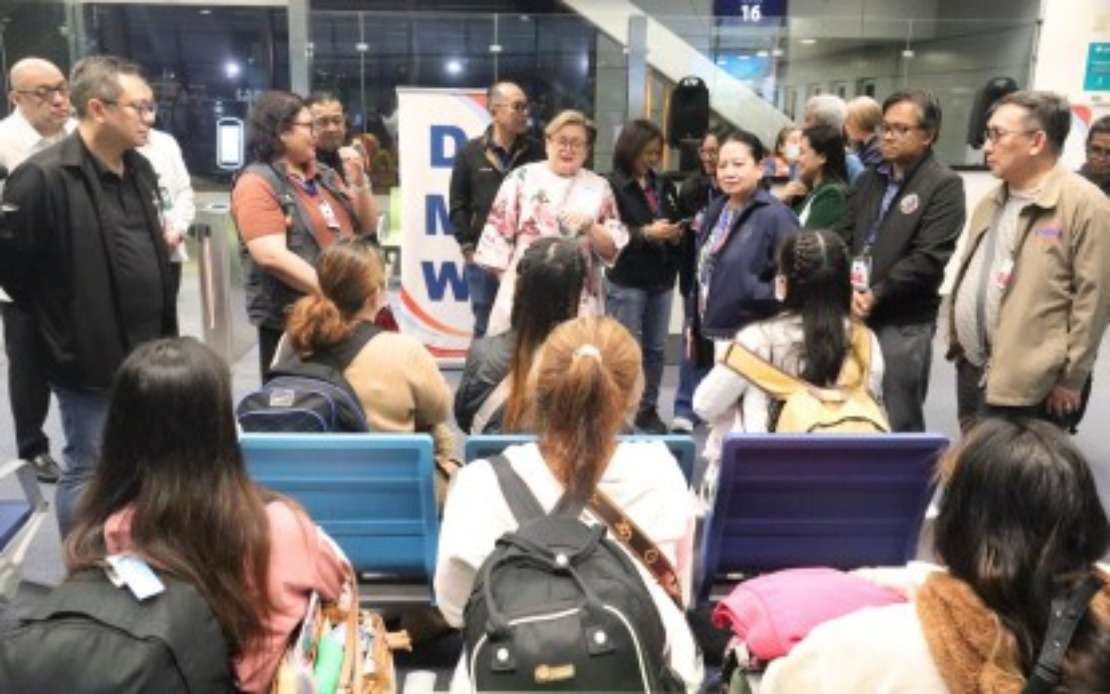
Twenty-four Filipinos who spent approximately nine months in detention within Russia have returned home safely to the Philippines, marking a diplomatic breakthrough achieved through direct intervention by President Ferdinand R. Marcos Jr. The detainees arrived at Ninoy Aquino International Airport on Sunday in two separate batches, with the first group of six landing shortly after midnight on Philippine Airlines Flight PR737 from Bangkok, followed by the remaining eighteen passengers on PAL Flight PR733 during the early morning hours.
The repatriation operation represented a coordinated effort across multiple Philippine government agencies, with Foreign Affairs Secretary Maria Theresa Lazaro and Migrant Workers Secretary Hans Cacdac personally receiving the returning citizens at the airport. The Department of Foreign Affairs collaborated with the Department of Migrant Workers and the Overseas Workers Welfare Administration to facilitate the logistics and support mechanisms necessary for their journey home. This interagency coordination underscores how the government mobilised resources across different departments to resolve a complex overseas protection issue involving vulnerable Filipino citizens.
President Marcos had announced the forthcoming return of these nationals following his bilateral engagement with Russian President Vladimir Putin at the ASEAN-Russia Commemorative Summit in Kazan earlier in the week. The Philippine leader explicitly thanked Putin and the Russian government for their cooperation in facilitating the release and repatriation process. This diplomatic overture demonstrated the potential for resolving disputes between the two nations through high-level political engagement, even amid broader geopolitical tensions affecting various international relationships in the region.
The detainees had been held in Irkutsk, a major city in southeastern Siberia, without formal criminal charges being lodged against them during their lengthy confinement. This absence of formal charges raised significant concerns about the nature of their detention and the legal processes involved in their case. The protracted nature of their imprisonment without clarity on the charges or their legal status created considerable anxiety both for the families of the detained workers and for Philippine officials tasked with ensuring the protection of citizens abroad.
Investigations by Philippine government agencies revealed that these individuals may have fallen victim to illegal recruitment schemes, suggesting they were deceived or misled about the nature of work or employment opportunities awaiting them in Russia. Once in the country, they encountered immigration-related violations and were subsequently taken into custody by Russian authorities. This pattern aligns with broader concerns across Southeast Asia regarding transnational human trafficking networks and unscrupulous recruitment agencies that prey on vulnerable workers seeking employment opportunities abroad.
The circumstances surrounding their recruitment and transport to Russia point to systemic vulnerabilities within the overseas employment framework that continues to affect Filipino workers searching for employment in distant labour markets. These individuals became ensnared in a complex situation combining recruitment fraud with immigration complications, leaving them in legal limbo within the Russian federation. The case illustrates the risks faced by migrant workers when they engage with unverified recruitment channels or when employment opportunities presented lack transparency about actual working conditions, compensation structures, and legal status requirements.
For Malaysian readers, this incident carries particular relevance given the substantial number of workers from Southeast Asia engaged in similar migration patterns across various countries. The protection of overseas workers remains an ongoing priority for regional governments, as migration corridors connecting Southeast Asian nations to distant labour markets have created opportunities for exploitation by criminal networks. The successful resolution of the Filipino case demonstrates the importance of diplomatic channels in recovering citizens caught in such predicaments, while simultaneously highlighting the need for strengthened pre-departure orientation programmes and employment verification systems.
The Philippine government has committed to providing comprehensive assistance and reintegration support services to these returning nationals as they readjust to life in their home country. Authorities have initiated investigations into the specific circumstances surrounding their recruitment, the involvement of any local recruitment agencies, and the mechanisms through which they were transported to Russia. These investigations may help identify and hold accountable individuals or organisations responsible for facilitating the illegal recruitment scheme, potentially disrupting similar networks operating within the region.
This repatriation also reflects the growing diplomatic importance of bilateral relationships between major Southeast Asian nations and global powers in addressing practical concerns affecting their citizens. The ability of President Marcos to personally engage President Putin on this matter and achieve a positive outcome demonstrates how direct leadership involvement can sometimes cut through bureaucratic barriers and facilitate humanitarian resolutions. The incident adds another layer to the complex diplomatic relationship between the Philippines and Russia, showing that even amid international complications, both nations can cooperate on issues of mutual humanitarian concern.
Looking forward, the successful return of these twenty-four nationals should prompt renewed examination of overseas recruitment practices, worker protection mechanisms, and international cooperation frameworks designed to prevent similar incidents. The Department of Migrant Workers and related agencies should consider this case study when reviewing licensing requirements for recruitment agencies, pre-departure briefing protocols, and emergency response procedures for citizens caught in comparable situations abroad. Enhanced bilateral communication channels between the Philippines and other destination countries where Filipino workers are employed could help expedite future cases requiring intervention.

