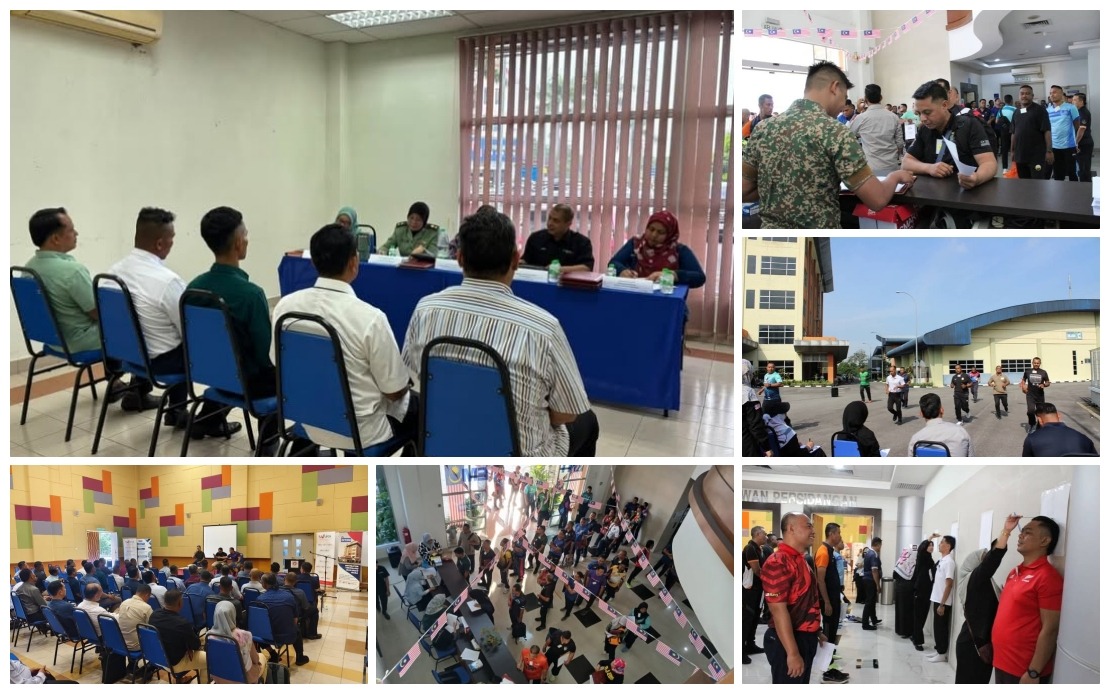
MARA has progressed with its recruitment of Full-Time External Wardens for its network of MARA Junior Science Colleges (MRSM), with 147 candidates who served in the military completing a rigorous physical interview stage last week. The assessment sessions occurred at the MARA Food Technology Incubator in Kepong on consecutive days, representing the culmination of an initial screening process that had already filtered applicants through two rounds of online evaluation.
According to MARA Chairman Datuk Dr Asyraf Wajdi Dusuki, the candidates who reached the interview stage had demonstrated sufficient merit during the preliminary online phases to warrant invitation for in-person evaluation. This multi-stage approach reflects MARA's commitment to identifying the most qualified individuals capable of assuming significant responsibility within the residential college environment. The competitive nature of the selection process underscores the importance the organisation places on warden appointments, given their role in shaping student experiences across the MRSM system.
The physical interview encompassed three distinct assessment components designed to evaluate candidates comprehensively. Applicants underwent Body Mass Index screening to establish baseline fitness standards, completed the Bleep Test to gauge cardiovascular endurance and stamina, and participated in face-to-face interviews where selection panels could assess interpersonal skills, communication ability, and alignment with institutional values. This tripartite approach ensures that successful appointees possess not only the physical fitness required for demanding residential duties but also the temperament and professional demeanour necessary for effective leadership.
The role of MRSM warden extends considerably beyond conventional discipline and security functions. According to Asyraf Wajdi, wardens must internalise and actively promote MARA's educational philosophy, serving as intellectual guides and character-builders for residential students. In this conception, wardens function as parental figures within the college environment, providing mentorship that encompasses academic guidance, moral development, and pastoral care. This expanded remit reflects a holistic approach to student welfare that treats residential supervision as an educational intervention rather than merely a custodial function.
The appointment of disciplined, educationally-minded wardens addresses longstanding concerns within residential college systems across Malaysia and the region. By recruiting from military backgrounds, MARA gains individuals accustomed to structured environments, hierarchical responsibility, and duty-oriented cultures. These former military personnel bring established experience in leadership, crisis management, and the maintenance of order—attributes particularly valuable in managing large student populations during the formative adolescent and young adult years.
Ashraf Wajdi articulated broader institutional objectives that the warden initiative aims to accomplish within MRSM environments. Beyond traditional security roles, the strategic investment in robust warden recruitment and selection targets the reduction of bullying incidents, prevention of disciplinary breaches, and mitigation of broader social problems that may affect student wellbeing. By creating dedicated, professional residential leadership, MARA seeks to foster campus environments characterised by safety, order, and intellectual vibrancy—prerequisites for students to concentrate on academic pursuits and personal development.
Parallel recruitment processes are advancing concurrently with male candidate selection. A cohort of 162 female candidates with military service backgrounds were scheduled to undergo identical physical interview sessions in the week following the male assessments. This parallel track demonstrates MARA's commitment to gender balance in warden appointments and recognises that female students benefit from proximity to experienced female mentors. The substantial numbers of both male and female candidates suggests significant interest from former military personnel in transitioning to educational administration roles, potentially reflecting broader trends in military-to-civilian career movements within Malaysia.
Successful candidates from both cohorts are positioned to commence duties on July 1, establishing a defined timeline for institutional preparation and onboarding processes. This compressed timeline between selection completion and appointment commencement necessitates efficient administrative coordination to ensure newly appointed wardens receive orientation to MRSM-specific protocols, student profiles, facility operations, and emergency procedures. The clear effective date suggests MARA has aligned the warden recruitment cycle with the academic calendar, enabling wardens to begin their residential responsibilities at the start of the new academic term.
The expansion and professionalisation of MRSM warden recruitment positions these positions within broader Malaysian discourse regarding institutional reform and student welfare. Residential colleges remain significant components of Malaysia's gifted and elite education infrastructure, yet their effectiveness depends substantially on quality of student supervision and support systems. By investing in rigorous warden selection from pools of experienced military-trained candidates, MARA signals institutional commitment to elevating residential college standards and demonstrating to stakeholders that student safety and development remain paramount concerns.
For aspiring educational administrators across Southeast Asia observing Malaysian institutional practices, MARA's systematic approach to warden recruitment offers potential models. The multi-phase selection process balancing physical fitness assessment with interpersonal evaluation reflects best practices in personnel administration. As regional education systems increasingly emphasise holistic student development and campus safety, the methodologies employed in MRSM warden selection may inform improvements in residential college staffing across the broader region.

